Travel Guide Download
Introduction to the Sacred Heart Basilica
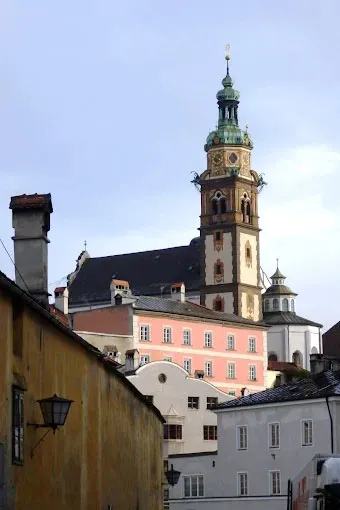
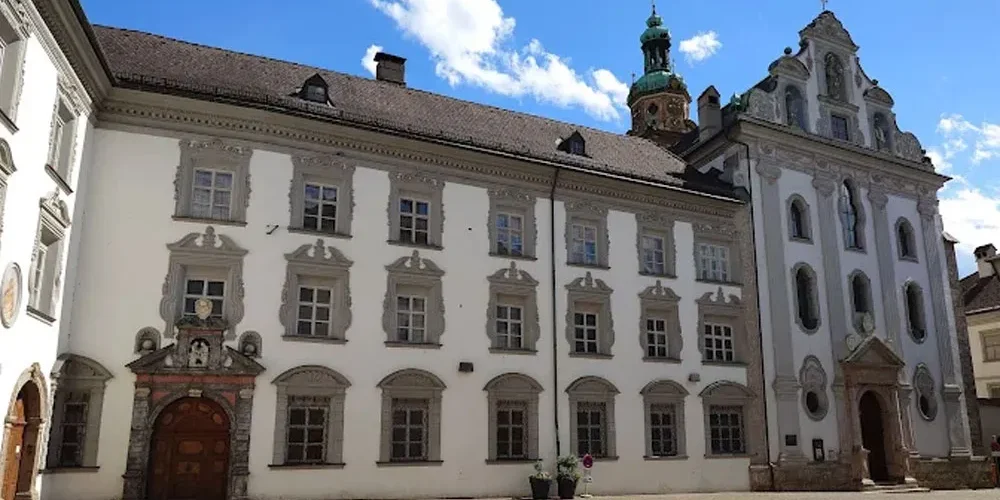
The Sacred Heart Basilica — known in German as the Herz-Jesu-Basilika — is a Roman Catholic Minor Basilica located at Stiftsplatz in the historic town of Hall in Tirol, Tyrol, Austria. It belongs to the Haller Damenstift, the Ladies’ Convent of Hall, and falls under the Diocese of Innsbruck.
Founded in 1567 by the Servant of God Archduchess Magdalena of Austria, the church was built as the spiritual heart of a noble women’s convent. Today, it stands as the central shrine of devotion to the Sacred Heart of Jesus in the Tyrol region, drawing pilgrims, tourists, and contemplative visitors from across Austria and the wider world.
The basilica is home to the cloistered Sisters of the Daughters of the Heart of Jesus, who maintain a tradition of perpetual Eucharistic adoration — at every hour of every day, one of the sisters is veiled in silent prayer before the altar, interceding for Austria and all who come to pray. This living, unbroken devotion gives the basilica its extraordinary spiritual depth.
Elevated to the rank of Minor Basilica by Pope Pius X, and cherished as a listed cultural heritage monument of Austria, the Sacred Heart Basilica is both a house of God and a masterwork of art — one of the finest blends of early Renaissance and Baroque architecture in all of Tyrol.
History of the Sacred Heart Basilica
The story of the Sacred Heart Basilica begins on 12 May 1567, when Archduchess Magdalena of Austria — the pious fourth daughter of Emperor Ferdinand I — laid the foundation stone for a convent on the grounds of a former princely palace and mint. Having taken a vow of celibacy after her father’s death in 1564, Archduchess Magdalena, alongside her sisters Margaret and Helena, established the Haller Damenstift: a convent for noble women guided by the spirituality of the Society of Jesus.
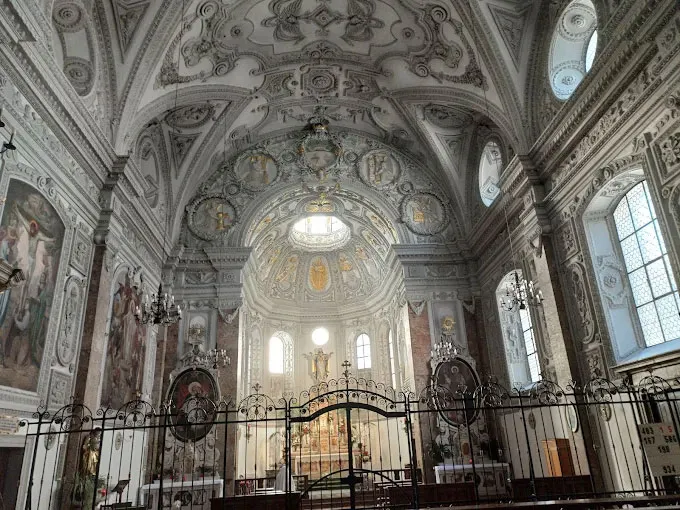
The collegiate church was designed and built by Innsbruck court architect Giovanni Lucchese and completed within just three years. It was consecrated on 11 November 1570. The church was subsequently enriched with elaborate Baroque stucco decorations by Onofrius Weigl of the Munich school (around 1630) and Georg Holzmeister of Innsbruck (around 1690).
In 1670, a powerful earthquake severely damaged the original church tower. During restoration, the pointed spire was replaced with the elegant Baroque dome that crowns the church to this day, and the interior was further transformed in the Baroque style.
A dark chapter followed in 1783, when Emperor Joseph II dissolved the Haller Damenstift as part of his secularisation policies. By 1786, the church was profaned: its furnishings sold, and the building served variously as a carriage house, a military arsenal, and even a fruit market.
After more than a century of silence, a revival came in 1912 when the Daughters of the Heart of Jesus established their convent in Hall in Tirol. Thanks to the efforts of Archduke Franz Ferdinand and generous benefactors, the church was solemnly re-consecrated in 1914. Pope Pius X bestowed upon it the prestigious title of Minor Basilica, and the sisters received a special mission to pray continuously for the land of Austria — a mission they fulfil to this day.
The remains of the foundress, Archduchess Magdalena, were transferred to the basilica in 1706; her tomb is embedded in the east wall of the church, a tangible link to the woman whose faith gave this place its life.
Architecture and Artistic Heritage of the Sacred Heart Basilica
The Sacred Heart Basilica presents a rare and compelling architectural dialogue between early Renaissance clarity and Baroque opulence — a fusion born from its construction in the 1560s and its dramatic transformation after the earthquake of 1670.
The exterior facade is distinguished by a refined portal flanked by Ionic columns and graced with statues of the Blessed Virgin Mary, Saint Ignatius of Loyola, and Saint Francis Xavier, sculpted around 1692. Above the main body of the church rises the distinctive Baroque dome that replaced the original Gothic spire — a silhouette that defines the skyline of the Stiftsplatz.
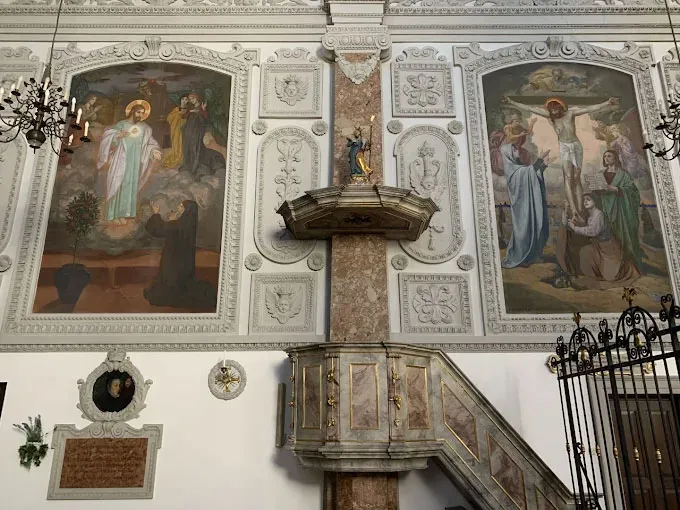
Inside, the church unfolds as a single nave with a soaring four-bay barrel vault, drawing the eye forward to the high altar. The interior walls are adorned with Art Nouveau frescoes painted by the Innsbruck artist Emanuel Raffeiner in 1919, depicting devotional scenes with grace and luminosity.
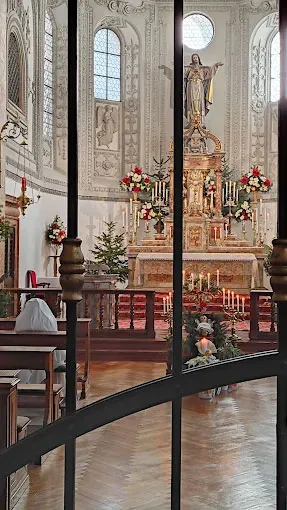
The elaborate stucco work — executed by Onofrius Weigl (c. 1630) and Georg Holzmeister (c. 1690) — gives the interior its characteristic Baroque richness. Above the high altar, a magnificent Sacred Heart statue by Innsbruck sculptor Alois Winkler presides over the space with quiet grandeur.
The adjacent convent summer residence (1715–16) contains a festive hall with exceptional High Baroque ceiling and wall frescoes by Kaspar Waldmann — among the finest examples of illusionistic architectural painting in Austria.
Key Artistic Highlights
- Baroque Dome (post-1670) — Replaced the original Gothic spire after earthquake damage; the church’s defining silhouette.
- Ionic Portal Statues (c. 1692) — Sculptures of Mary, Saint Ignatius of Loyola, and Saint Francis Xavier.
- Raffeiner Frescoes (1919) — Art Nouveau devotional wall frescoes by Emanuel Raffeiner of Innsbruck.
- Baroque Stucco Decoration — By Onofrius Weigl (c. 1630, Munich school) and Georg Holzmeister (c. 1690, Innsbruck).
- Sacred Heart High-Altar Statue — Carved by Innsbruck sculptor Alois Winkler.
- Waldmann Ceiling Frescoes — High Baroque illusionistic masterwork in the adjacent convent summer residence.
- Tomb of Archduchess Magdalena — Embedded in the east wall of the basilica; transferred here in 1706.
Visiting the Sacred Heart Basilica: Hours, Mass Schedule & Pilgrimage Guide
The Sacred Heart Basilica warmly welcomes pilgrims and visitors throughout the year. As an active place of perpetual adoration, the church maintains a prayerful, contemplative atmosphere — visitors are kindly asked to observe respectful silence during their time inside.
|
Service / Hour |
Time / Details |
|
Weekday Mass (Mon–Fri) |
7:00 AM |
|
Saturday Mass |
8:00 AM |
|
Sunday & Feast Day Sung Mass |
8:00 AM |
|
Daily Rosary & Benediction |
4:20 PM (every day) |
|
Visiting Hours |
Open daily during daylight hours |
|
Admission |
Free of charge |
|
Pilgrim Group Masses |
By advance arrangement — herzjesukloster-hall.at |
The basilica is particularly busy during June (the Month of the Sacred Heart), when many faithful come for special devotions, and in late August during the annual Sacred Heart Pilgrimage. Visitors seeking a moment of deep spiritual quiet may find the early morning Mass or the late-afternoon Rosary to be the most moving times to attend.
Feast Days and Religious Celebrations at the Sacred Heart Basilica
The liturgical calendar at the Sacred Heart Basilica is rich with celebration, drawing pilgrims from across Tyrol and beyond. The most significant observances include:
Feast of the Sacred Heart
Solemn feast Mass at 7:00 PM, followed by a Eucharistic Procession to the Franciscan Church. This is the spiritual highlight of the liturgical year at the basilica.
June — Month of the Sacred Heart
The entire month of June is devoted to the Sacred Heart, with special daily devotions, novenas, and a marked increase in pilgrim visitors throughout the month.
Annual Sacred Heart Pilgrimage (August)
Held at the end of August, the Herz-Jesu-Wallfahrt draws pilgrims from Austria and many other countries, with a rich spiritual programme spanning several days.
Feast of Archduchess Magdalena
A day of prayer and remembrance honouring the foundress and her ongoing cause for beatification as a Servant of God.
Perpetual Adoration
Maintained daily and year-round by the sisters. At any moment, one sister is in silent, veiled prayer before the Blessed Sacrament — the living heartbeat of the basilica’s mission.
Christmas & Easter Liturgies
Sung Masses celebrated with the full community of sisters; beautifully performed liturgies warmly open to all visitors.
Visit to the decks
On May 12, 2015, after a process of adaptation and construction of walkways, access to the Cathedral’s rooftops was opened to the public. The guided tour lasts approximately one hour, with about 30 minutes spent at the top, offering panoramic views of the city, including the Alcazaba, Gibralfaro Castle, and the cathedral’s roof and tower. Nighttime tours are also available in the summer. Tickets can be purchased at the Episcopal Palace, Plaza del Obispo, or at the ArsMálaga ticket office. In March 2016, new information panels were installed on the decks to inform visitors.
How to Get to the Sacred Heart Basilica — Directions & Transport
The basilica is located at Stiftsplatz, 6060 Hall in Tirol, Tyrol, Austria — in the heart of the medieval old town, easily accessible by train, bus, and car.
By Train (Recommended)
Take S-Bahn line S1 from Innsbruck Hauptbahnhof toward Hall in Tirol (approximately 20 minutes). From Hall in Tirol station, walk approximately 10 minutes to Stiftsplatz. Trains run frequently throughout the day.
By Bus
Bus line 4136 from Innsbruck city centre (e.g. Kaiserjägermuseum stop) runs to Hall in Tirol (approximately 30 minutes). From the bus stop, walk approximately 15 minutes to the basilica.
By Car
From Innsbruck, take the B171 east toward Hall in Tirol (approximately 10 km, 15 minutes). The old town is largely pedestrianised — use designated car parks on the town periphery and walk to Stiftsplatz.
By Cycling
Hall in Tirol is approximately 10 km east of Innsbruck. The scenic Inn Valley cycle path connects both towns — a pleasant 30–40 minute ride along the river.
From Innsbruck Airport (INN)
The airport is approximately 15 km from Hall in Tirol. Taxis and rental cars are readily available. Hall in Tirol is also well connected by the Austrian Federal Railway (ÖBB) from Salzburg, Vienna, and Munich.
Frequently Asked Questions about the Sacred Heart Basilica
It is a Roman Catholic Minor Basilica and the church of the historic Haller Damenstift (Ladies' Convent), dedicated to the Sacred Heart of Jesus. Founded in 1567 by Archduchess Magdalena of Austria, it is today home to the Sisters of the Daughters of the Heart of Jesus and serves as the central shrine of Sacred Heart devotion in Tyrol.
Yes. The basilica is open to the public throughout the year, free of charge. Visitors are welcome to pray, attend Mass, or admire the art and architecture. Respectful silence is expected as the church is an active place of perpetual adoration.
Weekday Masses (Monday to Friday) are at 7:00 AM. Saturday Mass is at 8:00 AM. Sunday and feast day Sung Masses are also at 8:00 AM. The daily Rosary with Benediction is at 4:20 PM. Pilgrim Masses can be arranged in advance with the convent.
Since 1914, the Sisters of the Daughters of the Heart of Jesus have maintained unbroken Eucharistic adoration — at any moment, one sister is in silent prayer before the altar, fulfilling their mission to intercede for Austria and the world. This continuous prayer is the spiritual heartbeat of the basilica.
The basilica is beautiful year-round. June (the Month of the Sacred Heart) and late August (during the annual pilgrimage) are the most vibrant times for a fuller spiritual experience. For quiet personal visits, early morning — especially after the 7:00 AM weekday Mass — offers a particularly peaceful atmosphere.
Yes. Group pilgrimages and special Masses can be arranged by contacting the Herz-Jesu-Kloster directly through their official website at herzjesukloster-hall.at. The basilica warmly welcomes organised pilgrimage groups throughout the year.
The basilica was founded in 1567 by Archduchess Magdalena of Austria, daughter of Emperor Ferdinand I. After making a vow of celibacy, she established the Haller Damenstift as a convent for noble women under Jesuit spiritual direction. Her tomb remains embedded in the east wall of the basilica to this day.
Parking is available in Hall in Tirol's town centre periphery. The old town is largely pedestrian-only, so visitors arriving by car should use designated car parks and walk to Stiftsplatz. Arriving by train or bus (from Innsbruck) is strongly recommended for convenience.