Introduction
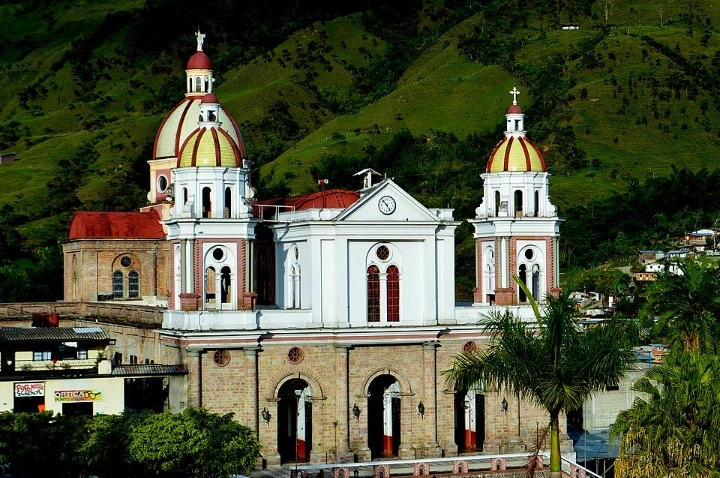
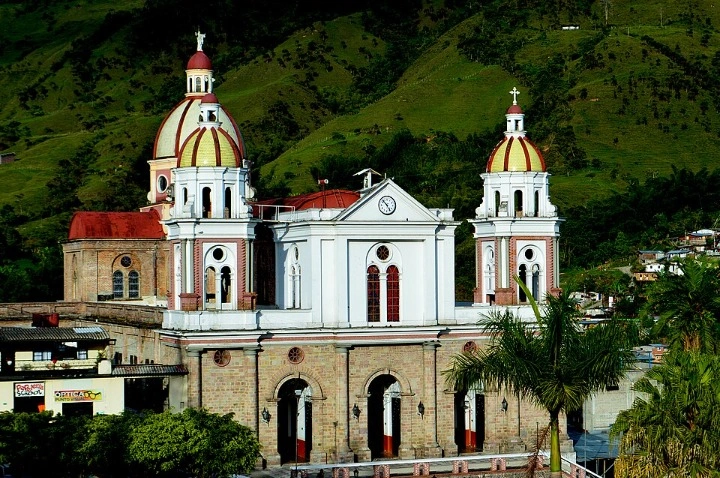
The Minor Basilica of Saint Anthony of Padua ( Italian : Basilica Minore di Sant’Antonio di Padova ) is a Catholic church located on the east side of Bolívar Square in the municipality of Manzanares , Caldas, Colombia. It is the most important religious sanctuary in the eastern province of the Department of Caldas, where the municipalities of Pensilvania , Marquetalia , Manzanares , Samaná , and Victoria converge , and is part of the parish vicariate of the Diocese of La Dorada-Guaduas. Its dome reaches a height of 42 meters, and it is 59 meters long and 32.50 meters wide. Romanesque and Neoclassical styles predominate in its architecture. History of the Descent of the Virgin of Chiquinquirá. The “Descent of the Virgin of Chiquinquirá” is a tradition originating in Andalusia, Spain, and has been celebrated in Maracaibo since the early 18th century. This event began to gain importance after the coronation of the Virgin of Chiquinquirá in 1942. However, from 1942 to 1970, the celebration was not held regularly. It was during Monsignor Roberto Luckert ‘s tenure as parish priest of the Basilica, between 1972-1978 and 1980-1985, that he revived the celebration with the aim of bringing the faithful together again, especially those who had lived in El Saladillo and had to migrate to other parts of the city as a result of the demolition of buildings. In this way, the tradition was recovered, and the last Saturday of October was established as the date for its celebration. Previously, the procession was referred to as the “Descent” rather than the “Transfer.” After Mass, the niche was opened, and the altarpiece was passed along a line of attendants until it was placed on a platform for the people to venerate. The procession did not begin until the last parishioner had paid homage to the patron saint. Over the years, the idea of bringing the image of the Virgin closer to her people went through very rudimentary methods. A manual wooden slide was used for the descent; it was nothing more than a pulley with a plank and a rope. Lowering the image took about two hours, and there were always shouts of “Let go! Bring her down!” from those involved in the process. Then, in 2002, under the leadership of Father Eleuterio Cuevas, a new slide with an electronic system was installed, allowing the image to be lowered in 30 minutes. In addition to adding a light show that made it more visually appealing and allowed for televising the event to reach a wider audience, since 2009, due to the large number of faithful who gathered at the Basilica and in commemoration of the 300th anniversary of its renovation, this celebration has been held in the Basilica Plaza. The slide was extended to 60 meters, and it is there that the Virgin descends to the rhythm of Zulian gaita music every last Saturday of October. November December
By 1864, the fledgling town of Manzanares had approximately 400 inhabitants. Its founders, anticipating that the hamlet was destined to become a municipality in the region and that it would need administrative and ecclesiastical authorities, began to organize themselves. Because of this, and given the prominent Catholic devotion fostered during the Spanish colonization, the residents of the hamlet felt the need to build a small chapel that would house prayer and religious contemplation in the province. For this purpose, a rustic hermitage was commissioned in the area currently occupied by the Nuestra Señora del Rosario Educational Institution. The land was donated by Mr. Emigdio Campuzano Gallego, as recounted in the monograph “Manzanares: A Past of Honor in History.” The chapel was built with materials of the time such as guadua bamboo, adobe, wood , and straw . In 1865, at the request of the inhabitants, Father Manuel Emeterio Celedonio Díaz Badillo, sent by the Diocese of Santafé de Bogotá, arrived. He was commissioned by Bishop Ignacio Buenaventura to survey the small village and begin feasibility studies for the creation of a parish. Three years later, it was officially established in a ceremony held on December 3, 1868, and consecrated under the title of Saint Anthony of Padua, with the protection of Our Lady of the Rosary and Saint Francis of Assisi . Initially, it was assigned to the ecclesiastical jurisdiction of the Diocese of Cundinamarca, later to the Diocese of Ibagué , then to the Diocese of Manizales , and finally, in 1984, to the Diocese of La Dorada-Guaduas.
Second Parish Church
In 1902, construction began on the second church, commissioned by the German-born priest Antonio María Hartman and entrusted to the master builder Paulino Castaño. Its architecture was predominantly Mudéjar in style. The façade featured a base carved from maní stone, with semicircular arched doorways, followed by three levels constructed of wattle and daub, each with five windows, topped by a Baroque- style pediment and a tower with a clock and bell tower. The interior was divided into three naves: a central nave and two side aisles, with circular columns topped by cornices and semicircular arches. The altar was preceded by a large altarpiece carved with images of Jesus of Nazareth, Joseph and Mary, as well as Saint Anthony of Padua. It was completed in 1916.
Fire
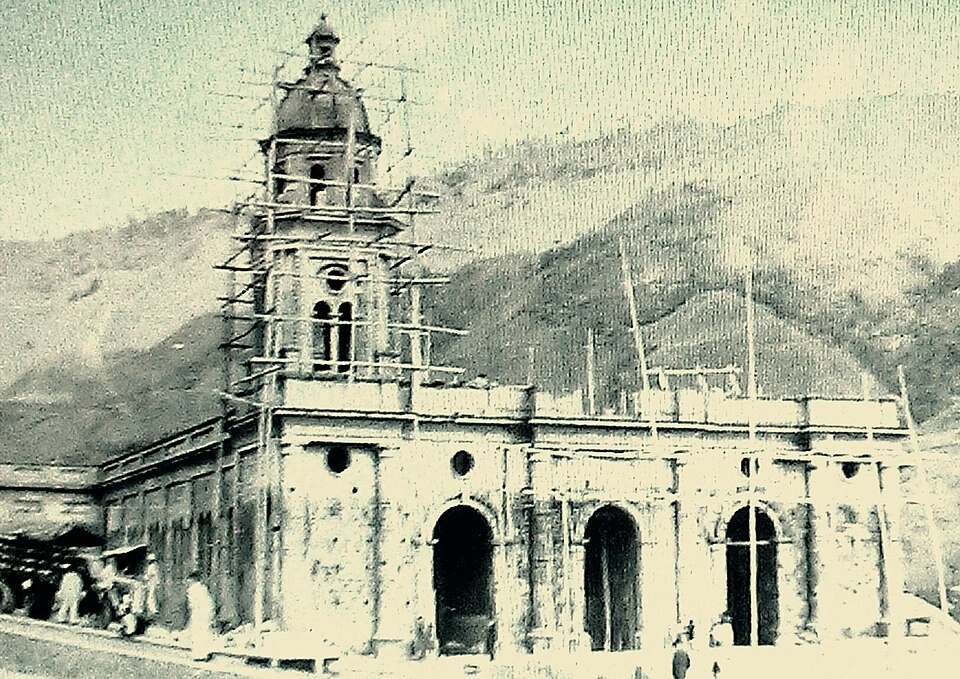
On November 18, 1945, at 3:00 in the afternoon, a fire broke out in a commercial establishment, which quickly spread through several buildings, reaching the infrastructure of the temple, which was reduced to rubble, of which only the columns and part of the facade were preserved.
Architecture of Basilica of St. Anthony of Padua, Manzanares, Colombia
Architect : Marco Ruiz.
Architectural style: Romanesque architecture, Neoclassical architecture, Renaissance architecture.
Construction of the Minor Basilica
After the fire that occurred in 1945, Father Pedro José Ramírez Sendoya, parish priest of the Municipality, began the procedures for the construction of a new temple, the design was in charge of the architect Marco A. Ruiz, person who was entrusted with the mission of designing the plans of a temple with characteristics of a basilica, starting works in 1946 and concluding the construction in 1968, extending for more than 20 years. Due to funding difficulties, construction was carried out in stages. First, the base of the facade and the columns were repaired, followed by the walls and semicircular arches. Later, the left tower and the central vault were erected, and finally, the right wing tower, the main dome, and the sacristy were completed. During the project, parish priests such as Marcos Lombo Bonilla and Julio Giraldo Serna served, and their enthusiasm and leadership instilled charity and civic pride in the community, successfully securing funding for the project at every stage until its completion in 1966.
Features and style
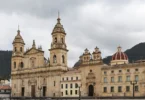
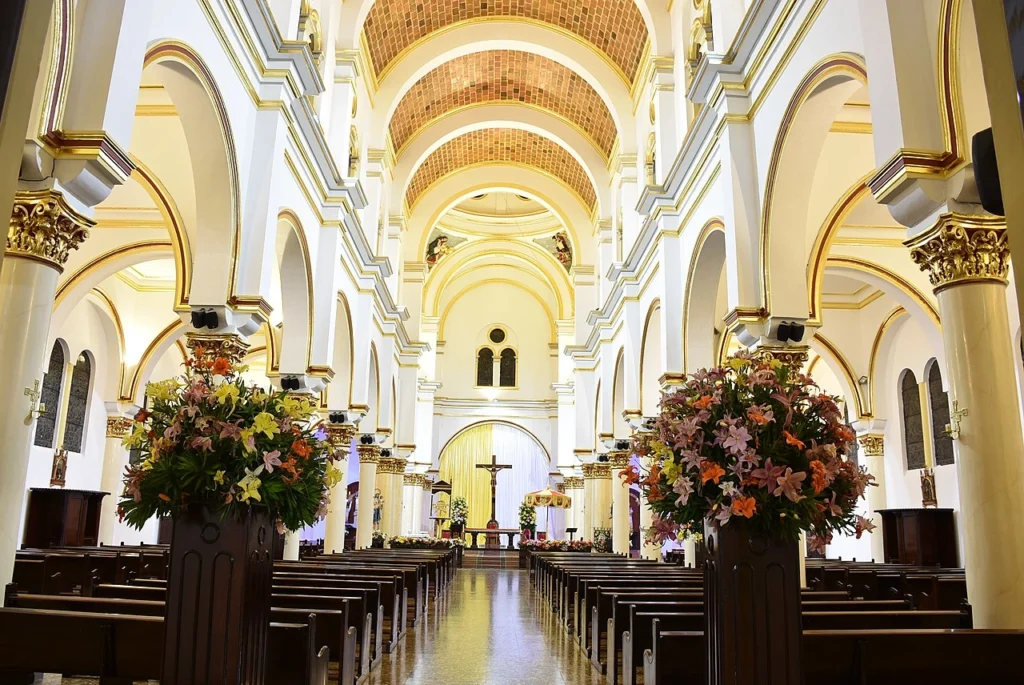
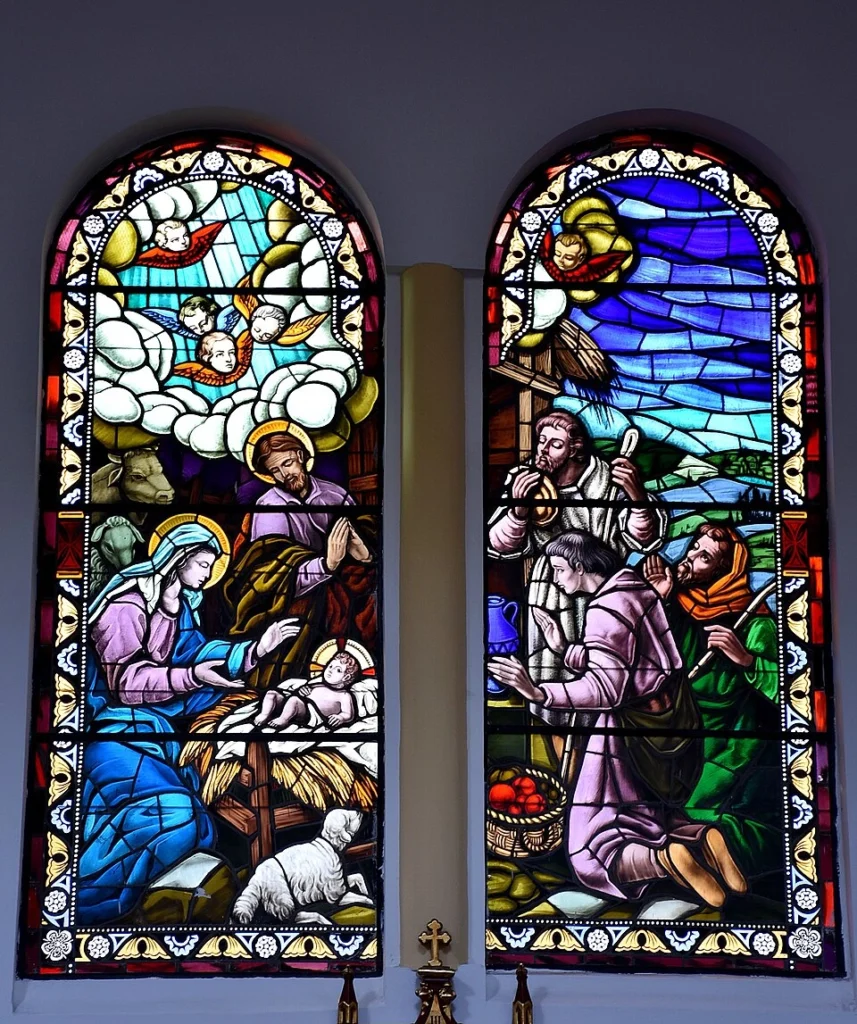
Its architecture consists of a classic basilica floor plan in the shape of a Latin cross, where the Romanesque style predominates with a neoclassical tendency. Its facade preserves the base built in peanut stone and the columns of the temple that burned down in 1945. It has three access doors to the interior, topped with semicircular arches, two front towers, a large semi-spherical dome and a republican-style front with a monumental clock. Its interior consists of a central nave, two side aisles, and the main altar, supported by Roman pillars and semicircular arches, adorned with capitals and cornices in the Republican and Corinthian styles; the walls are decorated with stained-glass windows imported from Italy, with artistic engravings of the passion and death of Jesus Christ these acquire greater detail when illuminated by the sun’s rays. The main altar is preceded by four vaults forming a Latin cross, above which rises a large Renaissance-style dome , with sculpted works of the four Evangelists : Saint Matthew , Saint Mark , Saint John , and Saint Luke .
Restoration
Due to the deteriorating conditions that worsened over time, a committee called “Pro Minor Basilica” was formed in 2013. This group was chaired by Mr. Fabio Ramírez Ramírez and was made up of prominent citizens in the religious, charitable, civic, and social spheres of the municipality, residing in Manzanares and Manizales. The objective was to carry out a total waterproofing of the roofs and coverings of the temple, eliminating leaks and drips that caused cracks in the side aisles and the central vault, a project that was embraced by the parish priest of the time, Father Yoni Quintana Niño, who with his approval and enthusiasm participated in the restoration of the future basilica, which also included a general change of paint and new ornamental aspects, the financing was carried out through bonds , bazaars, donations and own resources of the parish , finishing the work in the year 2015.
Proclamation as a minor basilica
On December 9, 2015, Pope Francis granted the parish church the title of Minor Basilica of Saint Anthony of Padua. On April 29, 2017, after fulfilling all the requirements, the proclamation ceremony took place, presided over by the Archbishop of Ibagué , Monsignor Flavio Calle Zapata , and the Bishop of the Diocese of La Dorada-Guaduas, Monsignor Oscar Aníbal Salazar Gómez .
Ornamental Aspects
Among the most outstanding religious elements are: An original replica of the Virgin of Guadalupe , 1.22 meters wide by 1.85 meters high, sent from Mexico City ; a replica of the Infant Jesus of Prague , sent from the Czech Republic ; a 4-meter-high wooden crucified Christ ; and an altarpiece with the image of the Lord of Miracles of Buga .
Relic of Saint Anthony
In 2021, a corporeal relic of Saint Anthony of Padua, patron saint of the minor basilica, was sent from Padua, Italy. This relic is displayed in a bronze reliquary, plated in 24-karat gold, located on the altar of the tabernacle, and can be venerated by the faithful, visitors, and pilgrims from all over the world.
Oratory
In 2013 an auxiliary oratory was opened, located in the left side aisle of the minor basilica. Parishioners come there daily in search of prayer and joy, as the Corpus Christi (‘body of Christ’) is permanently displayed. It also serves for the celebration of masses, baptisms, first communions, confirmations and other religious activities.
Auxiliary chapels
The Minor Basilica of Saint Anthony of Padua has six auxiliary chapels, located in different areas of the Municipality, these are:
- Chapel of the Child Jesus , Kilometer 1, Milenio III neighborhood.
- Chapel of Divine Mercy , Kilometer 16, La Ceiba village.
- Chapel of Our Lady of Fátima , Kilometer 14, district of Los Planes, road to Marquetalia Caldas.
- Chapel of the Holy Trinity , Kilometer 19, Las Margaritas district.
- Chapel of Our Lady of Carmen , Kilometer 19, Aguabonita district.
- Chapel of San Judas Tadeo , Kilometer 9, vda. Plains.
Stained-glass windows
One of the most visible and representative artistic elements of the minor basilica are its stained glass windows, works of art in enamel, set in the sun, which detail passages from the Bible and moments in the life of Jesus of Nazareth; these are distributed along the two side aisles.
Feast Day
Feast Day : 13 June
The Basilica of St. Anthony of Padua in Manzanares, Colombia, celebrates its patron saint’s feast day on June 13th, the universal Catholic date for St. Anthony of Padua, featuring masses, processions, and communal prayers honoring his life and miracles, especially his patronage for lost items, travelers, and the poor.
Church Mass Timing
Monday to Saturday : 7:00 AM, 12:00 PM, 5:30 PM, 7:00 PM.
Sunday : 7:00 AM, 10:00 AM, 12:00 PM, 5:30 PM, 7:00 PM.
Church Opening Time:
Monday : Closed
Tuesday to Saturday : 8:00 AM, 3:00 PM
Sunday : 8:00 AM, 12:00 PM.
Contact Info
Address : Minor Basilica of Saint Anthony of Padua
Manzanares, Caldas, Colombia.
Phone : +57 317 3494111
Accommodations
Connectivities
Airway
Basilica of St. Anthony of Padua, Manzanares, Colombia, to Manizales (La Nubia) Airport, distance 2h 46m (99.8 km)via Padua-Letras and Letras-Manizales.
Railway
Basilica of St. Anthony of Padua, Manzanares, Colombia, to Mariquita Railway Station, distance 1h 56m (67.9 km) via Vía A Pensilvania and Mariquita-Fresno.