Introduction
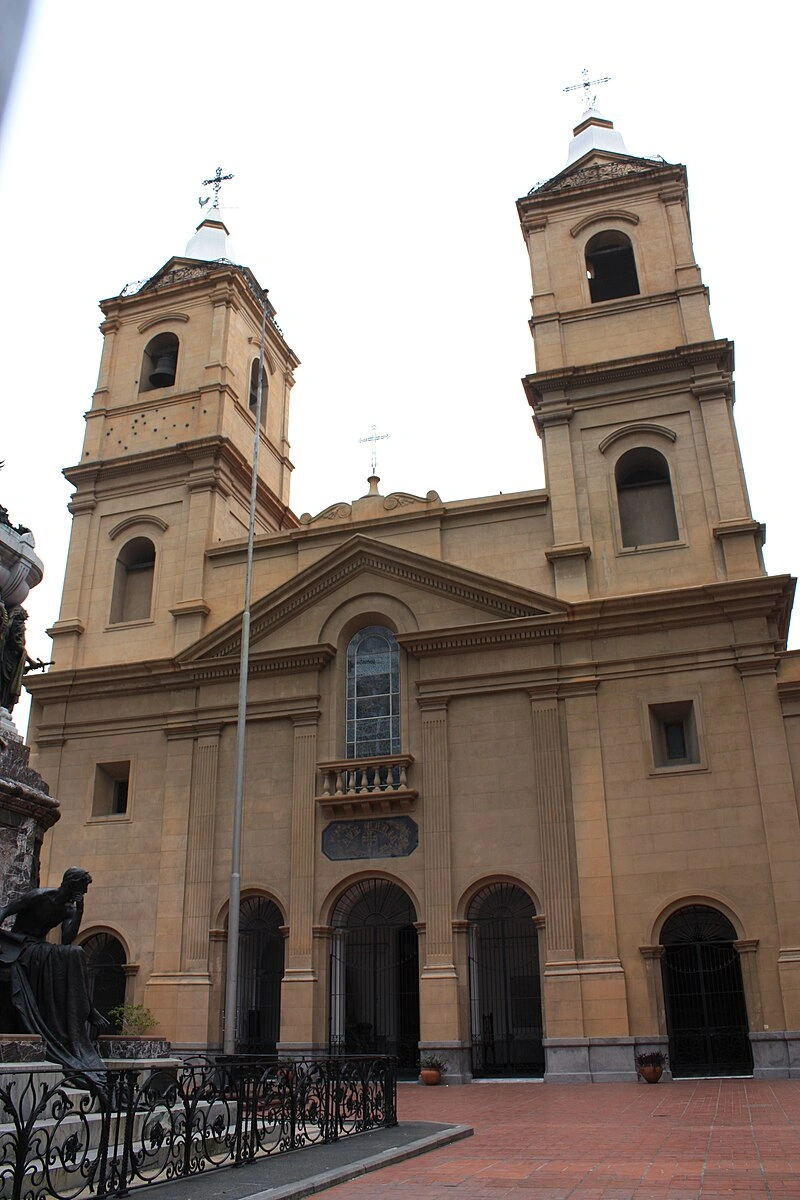
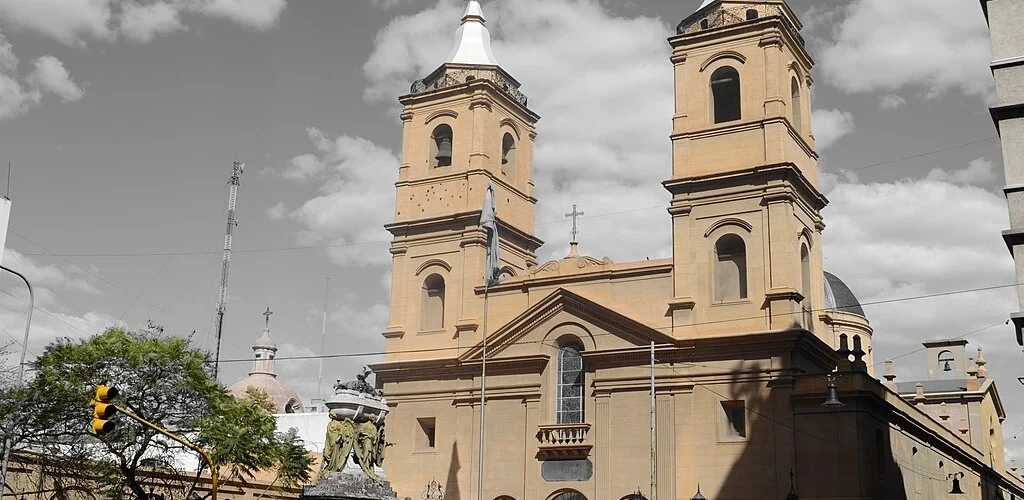
The Santo Domingo Convent, also known as the Basilica of Our Lady of the Rosary and Convent of Santo Domingo, is located in the Monserrat neighborhood of Buenos Aires. Built during colonial times, it was the site of a military conflict during the British invasions of the Río de la Plata. The convent also holds the tomb of Manuel Belgrano, one of Argentina’s national heroes. Inside the temple’s atrium, there is a mausoleum that contains the remains of General Manuel Belgrano. His parents are also buried there, along with Antonio González Balcarce, who led the Army of the North during the campaign in Upper Peru, and Hilarión de la Quintana. On the convent grounds, you can find the funerary urns of General José Matías Zapiola and Juan de Lezica y Torrezuri.
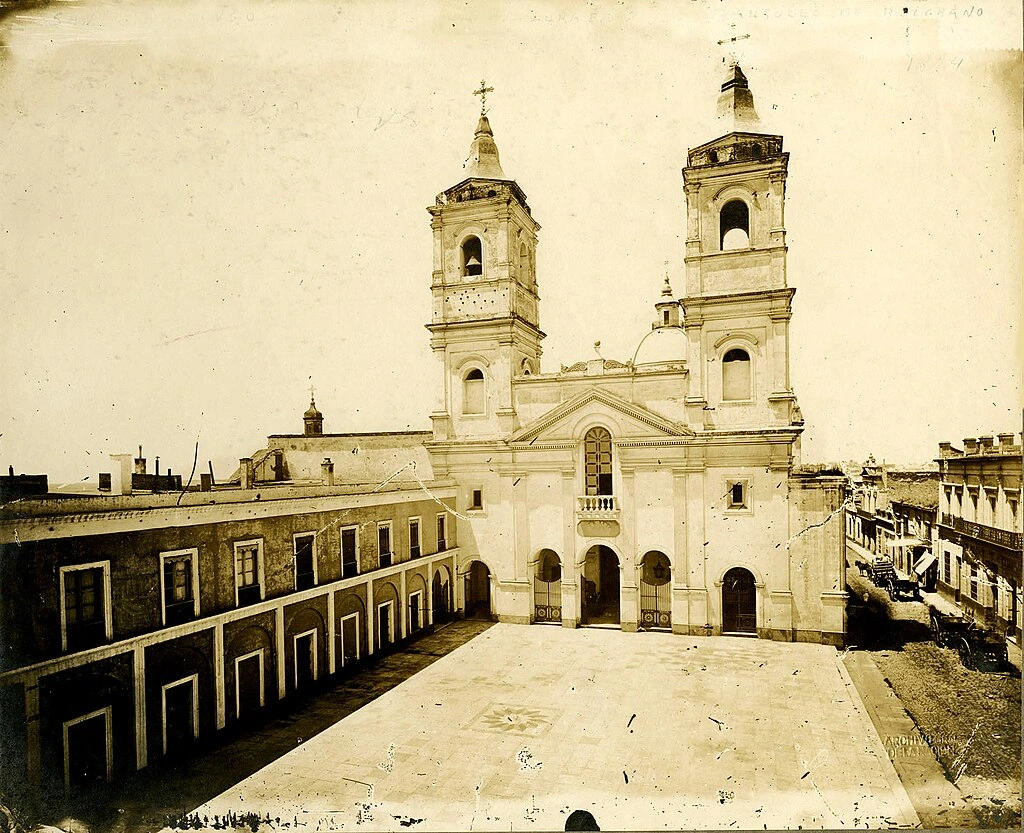
The site where the Basilica of Our Lady of the Rosary and the Convent of Santo Domingo now stand has been occupied by the Dominicans since 1606. However, it wasn’t until 1751 that construction began on the current building, designed by the architect Antonio Masella from Turin. The cornerstone was laid on June 29, but work was slow and uneven due to disagreements between Masella and the Dominican order. Between 1762 and 1779, construction resumed under the patronage and likely direction of Don Juan de Lezica y Torrezuri. The church was finally consecrated on October 17, 1783, although it was still unfinished. Architect Manuel Álvarez Rocha then took over the work, completing the east tower the following year. On February 11, 1792, once enough donations had been collected, work began on the Convent of Santo Domingo itself. It was finished around 1805, as records of expenses stop after that year.
The British Invasions
On June 27, 1806, British forces led by General William Beresford attacked Buenos Aires, catching the city unprepared. On July 1, worship at the church was suspended. Captain Santiago de Liniers promised Friar Gregorio Torres that if Our Lady of the Rosary helped him retake the city, he would donate the flags captured from the invaders. The British were defeated on, and on August 24, Liniers fulfilled his promise by presenting the flags to the church, where they remain today. The British tried to invade again on July 2, 1807. They took refuge in the convent’s east tower, defending themselves against the local militia known as the Tercio de Cántabros Montañeses, commanded by Colonel Pedro Andrés García. This became known as the Battle of Santo Domingo. The tower suffered heavy damage from cannon fire and had to be rebuilt. The original cannonballs were removed and replaced with wooden blocks as a tribute to the event. These commemorative blocks are still on display.
Early 19th Century and Changes
In 1817, the English artist Emeric Essex Vidal visited Buenos Aires and painted the church, noting it was in poor condition but praising its colors and organ. He also mentioned the bullet marks on the tower, which the friars had pointed out to him. During the presidency of Bernardino Rivadavia in the 1820s, the Dominicans were expelled, and the convent was repurposed as a Natural History Museum starting in 1826. The museum showcased around 800 animal specimens, 1,500 minerals, countless plants, and a numismatic collection of over 1,500 coins. An astronomical observatory and meteorological office were established in the upper part of the church, led by Italian scientist Octavio Fabrizio Mossotti, who also gave physics lectures. Sadly, most of the meteorological records were lost due to lack of interest at the time, although some were used by Alexander von Humboldt and ended up at the Institut de France.
Return of the Dominicans and Later Developments
On October 22, 1835, Juan Manuel de Rosas issued a decree allowing the Dominicans to return and reclaim the convent. Rosas was even named a brother of the Dominican order in recognition of this. Despite their return, the Natural History Museum continued operating in part of the building until 1854. The west tower was completed in 1849. Later additions include the basement behind the presbytery (1873), the vestry, and the chapels of Saint Vincent and the Rosary (1885). In 1894, architects Auguste Plou and Oliver remodeled the church, giving it the pediment it has today.
Mausoleum and Recognition
In 1903, a mausoleum designed by sculptor Ettore Ximenes was opened in the courtyard to house the remains of Manuel Belgrano, who was buried wearing the habit of the Dominican order. His parents, who had supported the convent generously, are also buried here, along with General Antonio González Balcarce and Hilarión de la Quintana. A plaque inside commemorates Martín de Álzaga, although his remains lie in Recoleta Cemetery. The church was elevated to the status of Basilica by Pope Pius X in 1910. On October 8, 1922, the image of Our Lady of the Rosary was crowned by papal decree, celebrated with a grand procession. Then, on May 21, 1942, the National Executive Branch declared the convent a National Historic Monument.
20th Century Damage and Restoration
On June 16, 1955, the convent was badly damaged and looted during the burning of churches, losing many precious documents and relics. Restoration efforts began in 1961 to repair the facades and preserve the historic structure.
Architecture of Basilica of Our Lady of the Rosary, Buenos Aires, Argentina
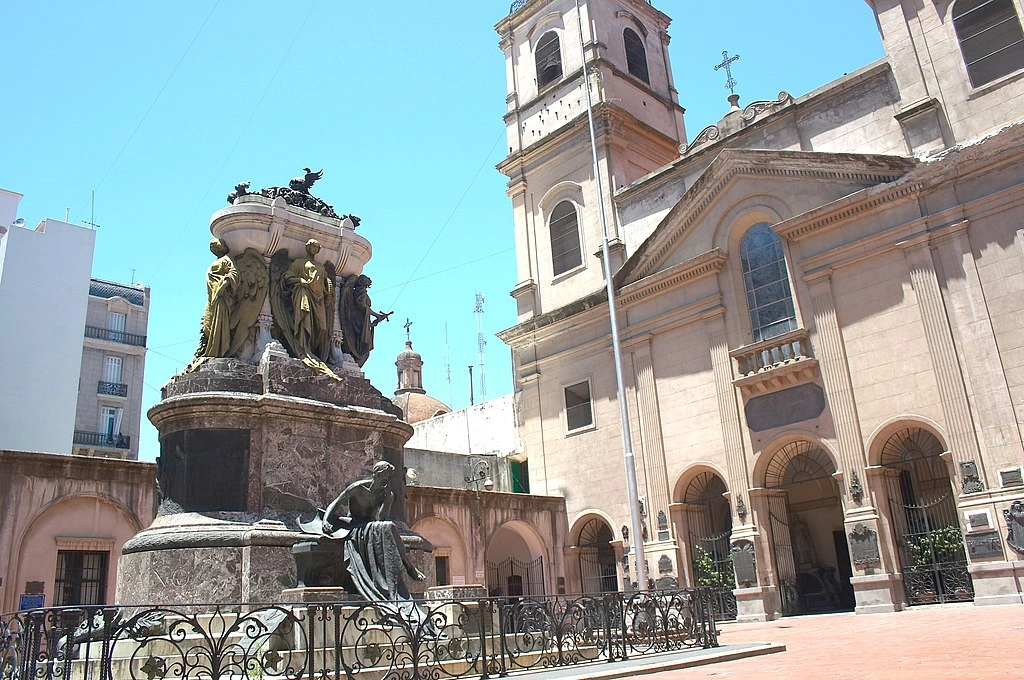
Architect: Antonio Masella
Architectural style: Neoclassical architecture.
The Basilica of Nuestra Señora del Rosario has three naves. The central nave features a barrel vault and a dome right over the crossing. The entire building measures about 70 meters in length if you include the narthex, and around 28.5 meters wide. One of the main highlights is the Spanish colonial-style iron bars in the atrium. These surround the mausoleum of Manuel Belgrano, which stands prominently there. At the entrance to the church, you’ll see three arches that lead into the narthex, framed by decorative latticework. On either side, there are two doors one in each tower that lead into the side aisles. Behind the altar in one of these aisles, the flags captured from the British battalions during the invasions are proudly displayed. Inside, the columns are decorated with detailed reliefs, and the nave is clad in carved marble. The main altar you see today was rebuilt after the original was destroyed in the 1955 fire. Unfortunately, the vaulted ceilings are in poor condition, with plaster peeling off, so protective nets have been placed below to catch any falling debris.
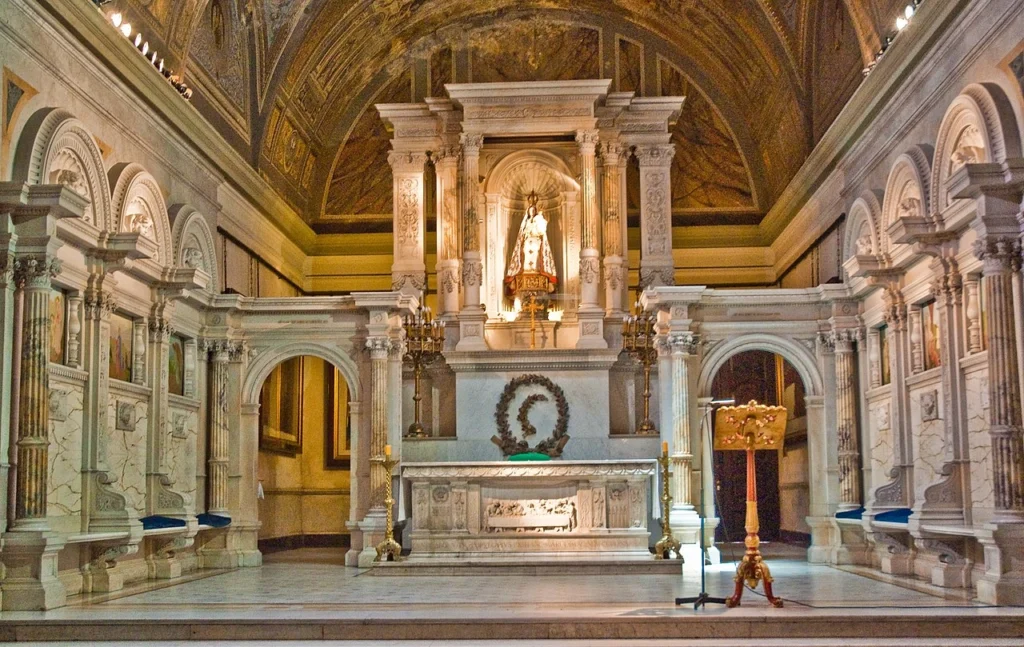
Interior Details
The confessionals are crafted from marble and feature intricately carved wooden doors. Above these doors, alternating inscriptions read “Noli Amplius Peccare” (“Sin no more”) and “Dele Iniquitatem Meam” (“Remove my iniquity”). The pulpit is marked with the phrase “Praedica Verbum Dei” (“Preach the Word of God”). The basilica also houses several chapels, each containing images of various saints, such as Saint Martin de Porres. Scattered throughout are plaques honoring heroes who fought in the defense and reconquest of Buenos Aires during the British invasions, as well as important members of the Dominican order and other notable figures buried here. Some of the notable names commemorated include Fray José del Rosario Zemborain, Alejo de Nevares Trespalacios, José Matías Zapiola, and Luis María Saavedra and his wife.
Commemorations and Symbols
Several plaques remember the great procession held in 1922, including one that reproduces a famous photograph showing the crowd moving from Plaza de Mayo past the Cathedral. Another special plaque displays the text of the decree signed on October 10, 1926, by President Marcelo Torcuato de Alvear. This decree granted permission to display the Argentine war flag alongside the image of Our Lady of the Rosary. Atop the right tower sits a weather vane shaped like a dog, symbolizing the Dominicans, who are often called Domini canis “dogs of the Lord” or guardians. The left tower features the classic silhouette of a rooster as its weather vane.
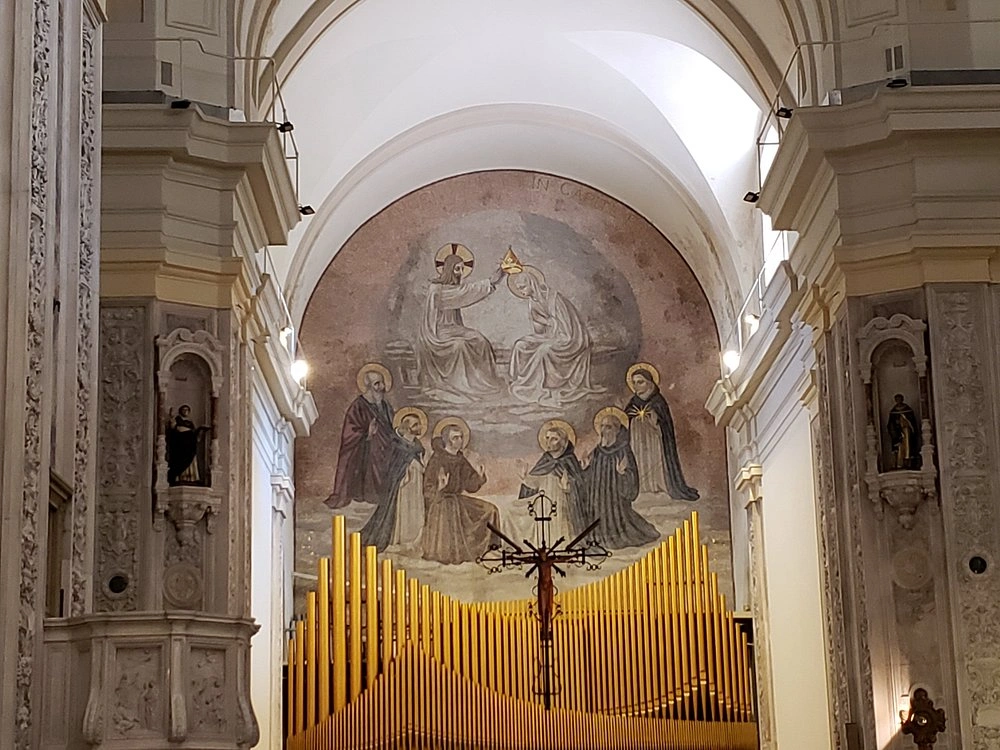
The Organ
The basilica once housed an organ built in France by the Mutin-Cavaillé-Coll firm, which was destroyed in the 1955 church burnings. Years later, a German organ was installed near the altar. However, this new instrument was never fully completed about 60% of it remains unfinished. While the organ runs at full capacity, its sound rarely fills the vast nave entirely. Still, the modern instrument from the 1960s creates a striking contrast against the colonial architecture and is one of the first things visitors notice upon entering.
Historical Objects Inside the Convent
Inside the convent you can admire:
- Two flags of the 71st Highlanders Regiment , which took part in the first English invasion.
- Two banners of the British Royal Navy offered by Santiago de Liniers to the Virgin of the Rosary.
- Two royalist flags donated by Manuel Belgrano .
- Painting of the Holy Founders, painted in 1762.
- The image of the Virgin of the Rosary of the Reconquest and Defense of Buenos Aires, brought from Peru, is more than four hundred years old.
Feast Day
Feast Day : 07 October
The Basilica of Our Lady of the Rosary in Buenos Aires, Argentina, celebrates its feast day on October 7, in honor of Our Lady of the Rosary. This day is dedicated to the Virgin Mary under the title given after the victory at the Battle of Lepanto in 1571, which was attributed to the power of the Rosary. The basilica holds special Masses and celebrations on this date, bringing together the local Catholic community in prayer and devotion to the Virgin Mary.
Church Mass Timing
Monday to Friday : 12:30 PM
Sunday : 11:00 AM
Church Opening Time:
Monday to Friday : 09:00 AM, 05:45 PM
Saturday : Closed
Sunday : 10:00 AM, 06:00 PM
Contact Info
Address : Convent of Santo Domingo
Defensa 422, C1065 Cdad. Autónoma de Buenos Aires, Argentina.
Phone : +54 11 2178-0478
Accommodations
Connectivities
Airway
Basilica of Our Lady of the Rosary, Buenos Aires, Argentina, to Aeroparque Internacional Jorge Newbery (AEP), distance 25 min (8.9 km) via Av. 9 de Julio and Au Illia.
Railway
Basilica of Our Lady of the Rosary, Buenos Aires, Argentina, to 3 de Febrero C1426 Cdad. Autónoma de Buenos Aires, distance between 36 min (14.2 km) via Au Illia.