Introduction
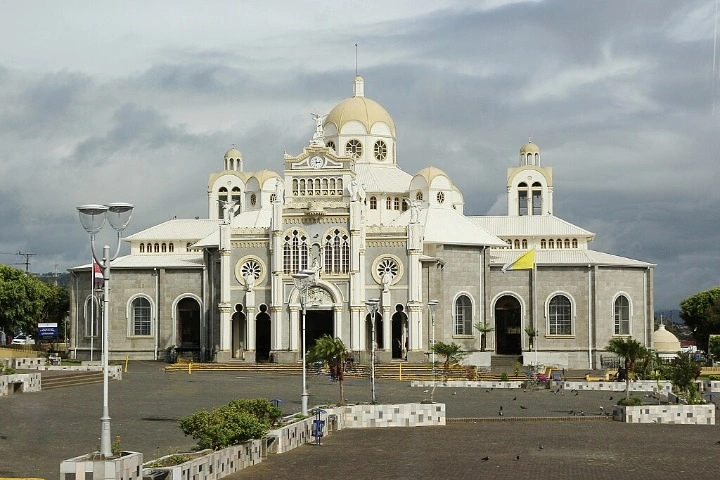
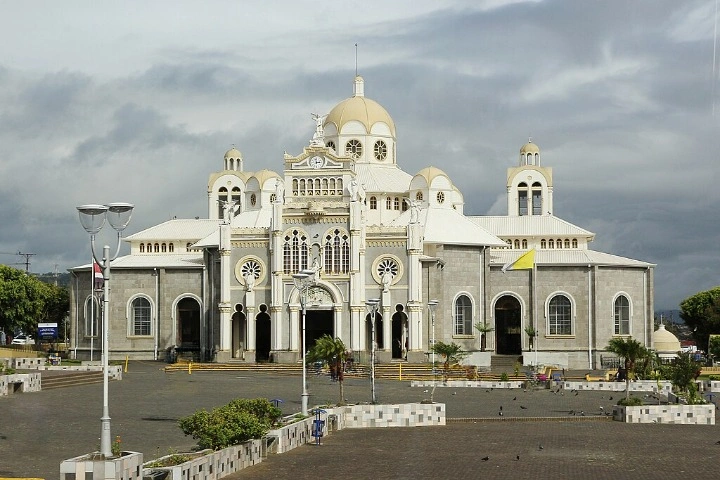
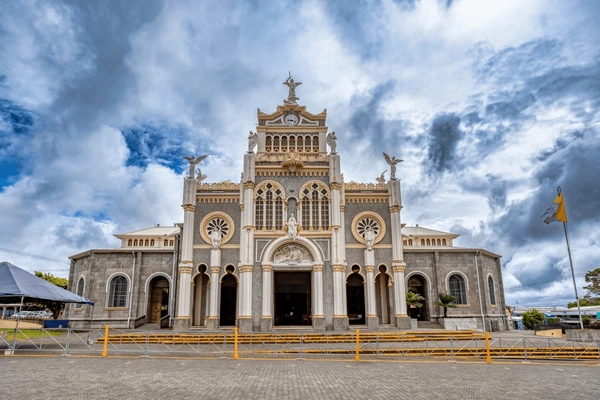
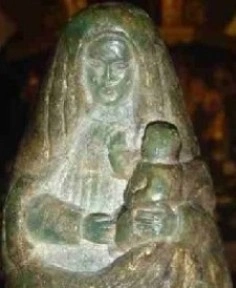
The Basílica de Nuestra Señora de los Ángeles (Our Lady of the Angels Basilica) is a Roman Catholic basilica in Costa Rica, located in the city of Cartago and dedicated to the Virgen de los Pardos, officially known as Virgen de los Ángeles (the Lady of the Angels). The basilica was built in 1639 and was partially destroyed by an earthquake. The basilica has since been restored and constitutes a unique mix of colonial architecture as well as 19th-century Byzantine style; the current building dates back to 1939. The Basilica of Our Lady of the Angels is consecrated to the Virgin of Nuestra Señora de los Ángeles, a small representation of the Virgin Mary carrying the infant Jesus, said to have been discovered by a peasant girl in Cartago.
A Miraculous Discovery in 1635
The story begins in 1635, in a small neighborhood on the outskirts of Cartago known as La Puebla de los Pardos. A young girl named Juana Pereira, who came from a humble background, discovered a small stone statue of the Virgin Mary resting on a rock. She brought it home, but every time, the statue mysteriously disappeared and reappeared on the same rock. Word of this strange event spread quickly. Locals began to believe it was a sign from God, and soon, people started attributing miracles to the image. Devotion to the Virgin who became known as Nuestra Señora de los Ángeles (Our Lady of the Angels) grew far beyond Cartago, reaching every corner of Costa Rica.
The First Hermitage and Early Church
Father Baltazar de Grado, who is believed to have been the first priest to be born in Costa Rica, served as the parish priest in Cartago at the time. Father Alonso de Sandoval served as his assistant, and Monsignor Fernando Nez Sagredo was the bishop of both Costa Rica and Nicaragua. During this period, the Spanish governor, Gregorio de Sandoval, was overseeing the construction of churches in Indigenous areas around Cartago. One of them was a small hermitage built right on the spot where the Virgin was found. This small structure was eventually replaced by larger churches, one of which was built in 1675 and remained for quite some time.
Becoming a Basilica
During the leadership of Monsignor Anselmo Llorente y Lafuente, Costa Rica’s first bishop, the church was officially given the title of basilica. This recognition marked the growing importance of the site for Catholics in the country.
The Altar and Its Symbolism
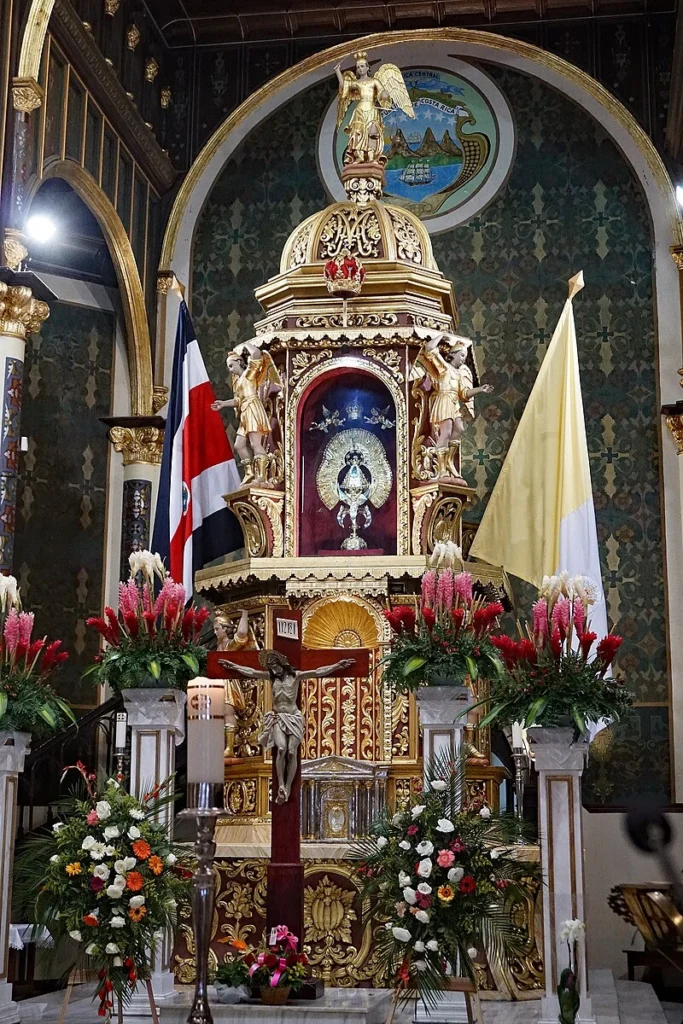
The current altar’s construction began in 1777. The carvings on it are rich in symbolism: stylized leaves wrap around a large cocoa pod, and beneath it, a smaller, younger pod symbolizes growth. On each side of the altar are baskets filled with fruit, meant to represent the abundance of blessings, miracles, and nourishment both physical and spiritual that the Virgin is believed to provide to her followers. The dome, which is shaped like a huge crown, is above everything. It is topped by a statue of Saint Michael the Archangel, who is depicted as defeating the devil, and it bears the anagram of the Virgin Mary.
Destruction and Rebirth
On May 4, 1910, a powerful earthquake destroyed the church. But just two years later, in 1912, construction of a new church began this time in a unique Byzantine style, designed by Catalan architect Luis Llach Llagostera. The structure we see today was completed in stages, combining both traditional and modern influences. In 1935, Pope Pius XI officially elevated the shrine to the status of a basilica, and in 1944, Monsignor Víctor Manuel Sanabria Martínez established it as the Parish of Our Lady of the Angels.
A National Center of Faith and Pilgrimage
The Basilica of Our Lady of the Angels is currently Costa Rica’s most popular pilgrimage destination. Millions of people from all over the country and even other parts of Central America walk to Cartago on August 2 to honor La Negrita, the Virgin’s beloved name. Many do the journey on foot, and some even finish the last stretch on their knees as an act of faith and devotion. The celebration is not only religious but also deeply cultural and a part of the Costa Rican people’s identity.
Architecture of Basilica of Our Lady of the Angels,Cartago, Costa Rica
Architect: Luis Llach
Architectural style: Byzantine architecture
Crypt of the Basilica
When the current Basilica was built, they made sure to preserve the exact spot where La Negrita the little image of the Virgin was believed to have been found. That stone, the very one where the miracle is said to have happened, is now kept in the crypt, tucked away beneath the main church. Pilgrims lovingly call it “the stone grotto.” The rock itself is quite large about 1.7 meters long and 1.2 meters high and sits partially embedded at the end of the underground chamber. In the past, people would go up and down a narrow staircase located inside a small chapel next to the main altar. But in 2004, the church remodelled the access so that people with disabilities, elderly visitors, or anyone with health conditions could reach the stone more easily. Now, the entrance is located behind the Basilica, not inside.
A Place of Gratitude
Inside the crypt, there’s also a votive offering room, where people leave small metal tokens in the shape of the body part they believe was healed like a leg, a heart, or even a pair of eyes. Others leave little charms or objects that represent a miracle or answered prayer. It’s a deeply personal space filled with hundreds of these symbols of faith, healing, and hope. A small statue of Juana Pereira, the young girl who found the Virgin, is also housed in a special urn. It’s not just a tribute to her, but to all the hardworking, humble women of the time who were often forgotten in the history books. You will come across paintings depicting Marian devotions from various countries throughout the Americas as you walk through the hallway that leads to the crypt. These paintings serve as a reminder that this faith is practiced by many people far beyond Costa Rica.
The spring
Just as it happens in the Sanctuary of Lourdes in France, where there is a spring under the grotto where the Virgin Mary is said to have appeared, also in the Sanctuary of Carthage, next to the stone of the discovery, there is a spring of water, which is very appreciated by the faithful, because they believe it to be blessed, and to be available to them, it was channeled through an internal pipe a few meters outside the Basilica, in what is known as the font or source of holy water, where believers drink and collect said water in bottles and some wash parts or their entire body, to ask for a favor or physical and spiritual healing.
The Pilgrimage and The Passage
Since the beginning of the novena to Our Lady of the Angels on August 23, but mainly on August 1 of each year, on the eve of the feast of La Negrita , thousands of people come to the religious center in what is called a ” pilgrimage “, in gratitude or request for favors. It is estimated that two million people participate in the pilgrimage each year. This pilgrimage consists of walking from wherever one lives to the Basilica. For residents of the Costa Rican capital, this walk covers just over 20 km of mountainous terrain (one must cross Cerro de Ochomogo), but many pilgrims also walk hundreds of kilometers from other distant parts of the country, such as Guanacaste or San Vito (Coto Brus) . Residents of Cartago also (generally) travel by bus to San José and walk to the Basilica of Cartago. Upon arriving at the Basilica, the pilgrims, overcoming fatigue and physical pain, enter on their knees to the main altar, where the small statue of her Son is located. It’s common to see people of all ages, from children in their parents’ arms to young people and even older adults. Many people also choose to sleep in tents in the Sanctuary square or in Cartago’s gardens and parks due to the congestion of public transportation. The Costa Rican Red Cross sets up checkpoints along the route to monitor the pilgrims’ health. On August 1, the traditional ceremony of dressing the image takes place, where she is tried on in several dresses with significant embroidery. On the morning of August 2, a solemn mass is celebrated in honor of Our Lady Queen of the Angels in the plaza of the Basilica, attended by seminarians, priests, bishops, nuns, dignitaries, and, of course, a large number of faithful. Also, after the actual day of the festival and in accordance with a tradition dating back to the end of the 18th century , the image is transferred to the cathedral of Cartago , located in the center of the city, where it remains until the beginning of September, when it is returned to the Basilica of Los Angeles, with a cheerful and colorful procession popularly called the Pasada de La Negrita de los Ángeles.
Robberies in the Sanctuary
The Sanctuary of Carthage has witnessed three major thefts:
- The first was in August 1824, by the student José Antonio Morales, and it was returned days later when he confessed to Father Antonio Pradó. Apparently, there were political motives.
- In November 1888, a second robbery occurred. The image was left behind, but all its attire and clothing were stolen. It was never known who the thieves were or what they had done with the jewelry.
- In the third theft, on May 13, 1950, two individuals stole the image of the Virgin with its embroidered mantle and murdered the guard Manuel Solano Torres. Given the impact on Costa Rican society, President Otilio Ulate decreed three days of national mourning. On May 21, the image was found without its mantle. In 1955, José León Sánchez was sentenced to prison for the theft, and was acquitted in 1999 of all penalties and responsibility for errors in due process.
Feast Day
Feast Day : 02 August
The feast day for the Basilica of Our Lady of the Angels (Basílica de Nuestra Señora de los Ángeles) in Cartago, Costa Rica, is August 2nd. This date commemorates the anniversary of the miraculous discovery of the statuette of “La Negrita,” the Virgin of the Angels, and is celebrated as a public holiday in Costa Rica with thousands of pilgrims traveling to the basilica in Cartago.
Church Mass Timing
Monday to Friday : 7:00 AM, 11:00 AM, 6:00 PM
Saturday : 11:00 AM, 4:00 PM, 6:00 PM
Sunday : 6:00 AM, 8:00 AM, 10:00 AM, 12:00 PM, 2:00 PM, 4:00 PM, 6:00 PM
Church Opening Time:
Monday to Friday : 08:00 AM, 12:00 PM, 01:00 PM , 8:00 PM.
Saturday : 08:00 AM, 11:00 AM.
Sunday : 08:00 AM, 12:00 PM, 01:00 PM , 8:00 PM.
Contact Info
Address : Basilica of Our Lady of the Angels
V37P+JQQ, C. 1, Provincia de Cartago, Cartago, Costa Rica.
Phone : +506 2551 0465
Accommodations
Connectivities
Airway
Basilica of Our Lady of the Angels,Cartago, Costa Rica, to Tobías Bolaños International Airport, distance 39 min (35.3 km) via Carr. Interamericana/Carr. Interamericana Sur/Route 2 and P.º de la Segunda República/Ruta Nacional Primaria 39.
Railway
Basilica of Our Lady of the Angels,Cartago, Costa Rica, to Cartago Urban Train Station Av. 3, distance between 5 min (2.3 km) via Ruta Nacional Primaria 10 and C. 2.