Introduction
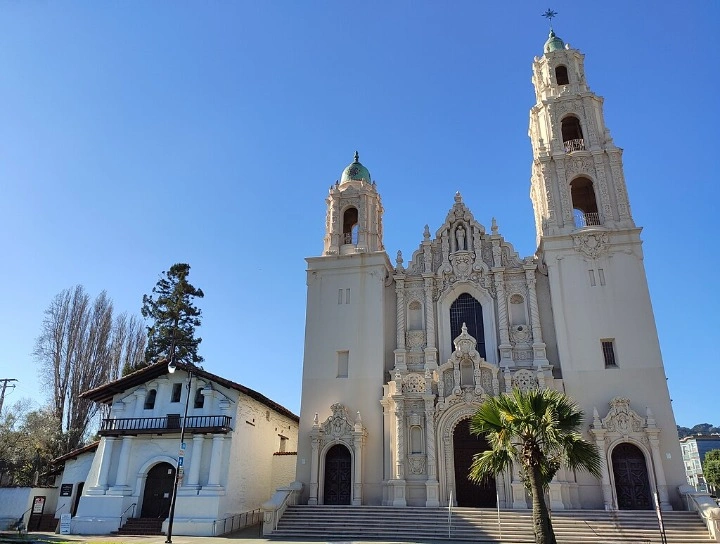
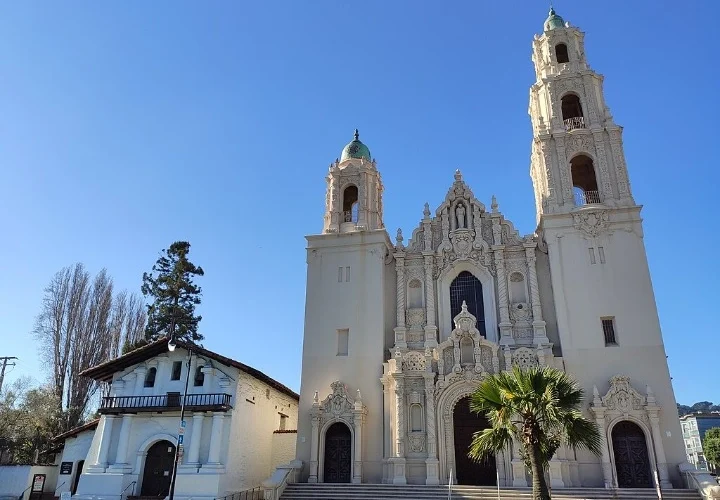
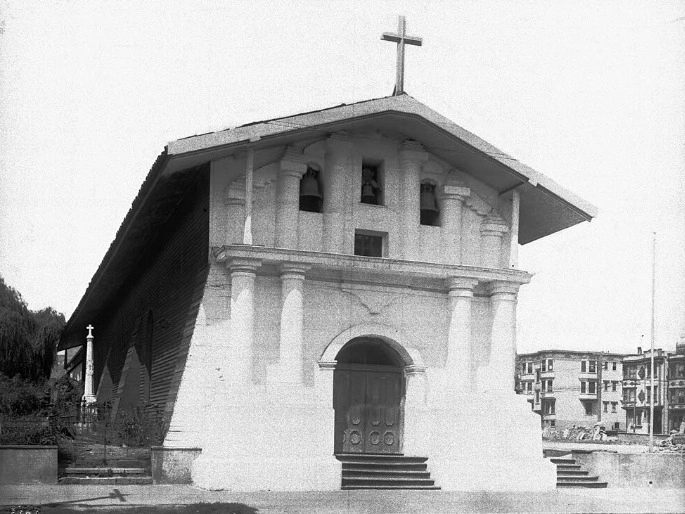
The Mission San Francisco de Asís (Spanish: Misión San Francisco de Asís), also known as Mission Dolores, is a historic Catholic Church complex in San Francisco, California. Operated by the Archdiocese of San Francisco, the complex was founded in the 18th century by Spanish Catholic missionaries. The mission contains two historic buildings: The Mission Dolores adobe chapel was completed in 1791. It is the oldest structure in San Francisco. The Mission Dolores Basilica was constructed in 1918. It was designated a minor basilica by Pope Pius XII in 1952. Located in the Mission District, the mission was founded on October 9, 1776, by Frs Francisco Palóu and Pedro Benito Cambón. The Franciscan Order sent the two priests to the then Spanish Province of Alta California to bring in Spanish settlers and evangelize the indigenous Ohlone people. The Ohlone provided most of the labor which built the adobe chapel. The early 20th-century Mission Dolores Basilica replaced a brick parish church built in 1876 that was destroyed in the San Francisco earthquake of 1906.
1700 to 1800
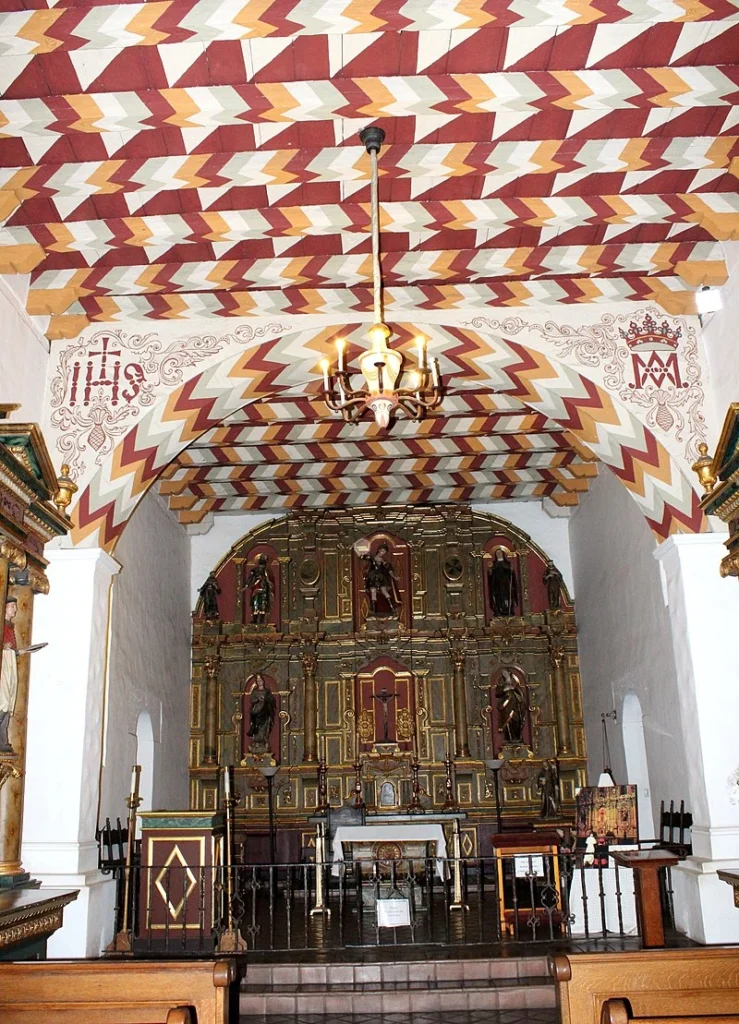
The site of the future Mission San Francisco was scouted by the Spanish missionary Pedro Font in March 1776 during a visit to the Bay Area by the Spanish explorer Juan Bautista de Anza. The Spanish missionaries named the new mission San Francisco de Asís, in honor of Francis of Assisi, founder of the Franciscan Order. It became commonly known as Mission Dolores, after the nearby creek and water source, Arroyo de Nuestra Señora de los Dolores (Our Lady of Sorrows Creek) On October 9, 1776, the missionaries dedicated a small chapel in present-day San Francisco as the Mission San Francisco. The chapel was located near the current Camp and Albion Street intersection, according to some sources. Members of the local Ramaytush Ohlone tribe are recorded as entering the mission in 1785. Later, they would provide labor for the construction of the new mission church. The construction of adobe walls for the Mission Dolores church began in 1788, with the Ohlone laborers manufacturing 36,000 bricks. By 1790, the walls were completed, plastered, and whitewashed.The missionary Junípero Serra is recorded as having celebrated a mass at the chapel while it was still under construction. The Mission Dolores adobe church was finished in 1791. The new church had adobe walls that were four feet thick. The redwood roof beams and vegetable dye-painted Ohlone designs on the ceiling were traditional. The mission complex at this time included a convent and facilities for agriculture and manufacturing.
1800 to 1848
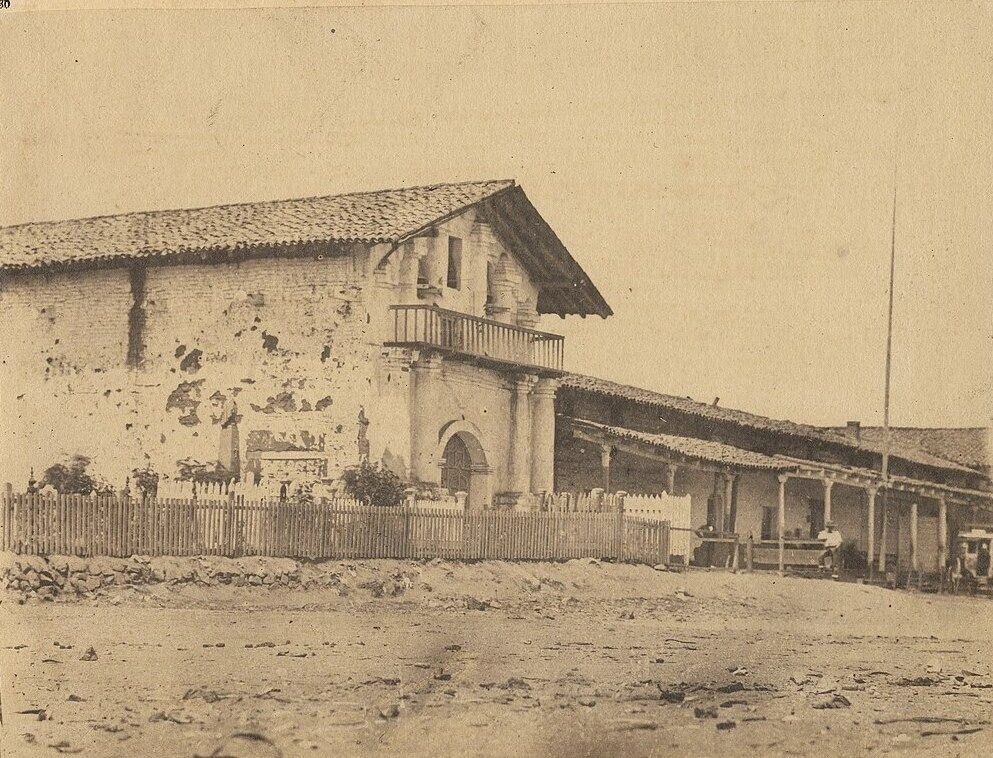
The early 19th century saw the greatest period of activity at Mission San Francisco: At its peak in 1810–1820, the average Indian population at Pueblo Dolores was about 1,100 people. In 1810 the Mission owned 11,000 sheep, 11,000 cows, and thousands of horses, goats, pigs, and mules. Its ranching and farming operations reached as far east as Alameda and as far south as San Mateo. Potrero Hill was where horses were corralled, and Mission High School was where cow milking sheds were located along Dolores Creek. Twenty looms were kept in operation to process wool into cloth. The Mission’s holdings were said to have a circumference of about 125 miles. The Franciscans founded the Mission San Rafael Arcángel in San Rafael, California, in 1817, to serve as a support and hospital for the Mission San Francisco de Asis. San Rafael became an independent mission in 1822. The newly independent nation of Mexico gained control of Alta California in 1821, when the Mexican War of Independence came to an end. The Franciscan overseers of the California missions and the New Mexican government had strained relationships. Supplies were scarce and over 5,000 Native Americans had died from disease and other causes at the Mission San Francisco. The Mexican Government decided to free the Native Americans who were under mission guardianship and give them mission lands. New regulations under the Mexican Secularization Act of 1833 forced the missions in 1834 to start selling their vast commercial properties. In practical terms, this meant that each mission could only own its church, its priests residence and small plots of land surrounding the church for gardens. The Mission San Francisco sold most of its property in 1836. By 1842, only eight Native Americans were still residing there.
1848 to 1900
The Mission San Francisco and the rest of Alta California became part of the United States after the Mexican-American War ended in 1848. With the end of Mexican authority, the rules governing the California missions became defunct. In 1848, the California Gold Rush brought a surge of American immigrants and commercial activity to the San Francisco area. In the 1850s, the city constructed two plank roads from the downtown area to the Mission District. Within a short period of time, the area established itself as a well-known resort and entertainment district. The Franciscans sold or leased some of the remaining mission land to developers who built saloons and gambling halls. By 1857, the Franciscans had turned control of the Mission San Francisco to the Archdiocese of San Francisco. During the late 19th century, the archdiocese converted part of the old convent into a two-story wooden wing for use as a seminary and priests’ residence. The rest of the convent building became the Mansion House, a tavern. By 1876, the archdiocese had razed the Mansion House, replacing it with a large Gothic Revival brick church to accommodate more congregants than the adobe church the archdiocese also covered the adobe church with clapboard siding for both cosmetic and protective reasons. In a subsequent renovation, the siding was removed.
1900 to the present
The brick church was destroyed and the adobe structure was damaged in the 1906 San Francisco earthquake. To prevent the huge fire sparked by the earthquake from engulfing the two buildings, firefighters blew up the convent and School of Notre Dame building across the street. The Mission Dolores Church was built by the archdiocese in 1913 to replace the destroyed brick church. The architect Willis Polk restored the adobe building in 1917. The construction of the new Mission Dolores Church experienced delays due to the American entry into World War I in 1917. 1918 marked its final completion. The church was remodeled in 1926, with the archdiocese adding churrigueresque ornamentation. These were inspired by exhibits at the 1915 Panama–California Exposition in San Diego, California. In 1952, Archbishop John J. Mitty announced that Pope Pius XII had elevated Mission Dolores to the status of a minor basilica. It became the first minor basilica west of the Mississippi River and the fifth one in the United States. The Mission Dolores is the name given to the adobe chapel built in 1791, while the 1918 church is now known as the Mission Dolores Basilica. A historic cemetery is also part of the mission complex.
Other historic designations
- San Francisco Designated Landmark #1 – City and County of San Francisco
- California Historical Landmark #327-1 – site of original Mission Dolores chapel and Dolores Lagoon
- California Historical Landmark #393 – “The Hospice,” an outpost of Mission Dolores founded in 1800 in San Mateo, California
- California Historical Landmark #784 – El Camino Real (the northernmost point visited by Serra)
Architecture of Mission Dolores Basilica, San Francisco, California, United States
Mission Dolores Mural
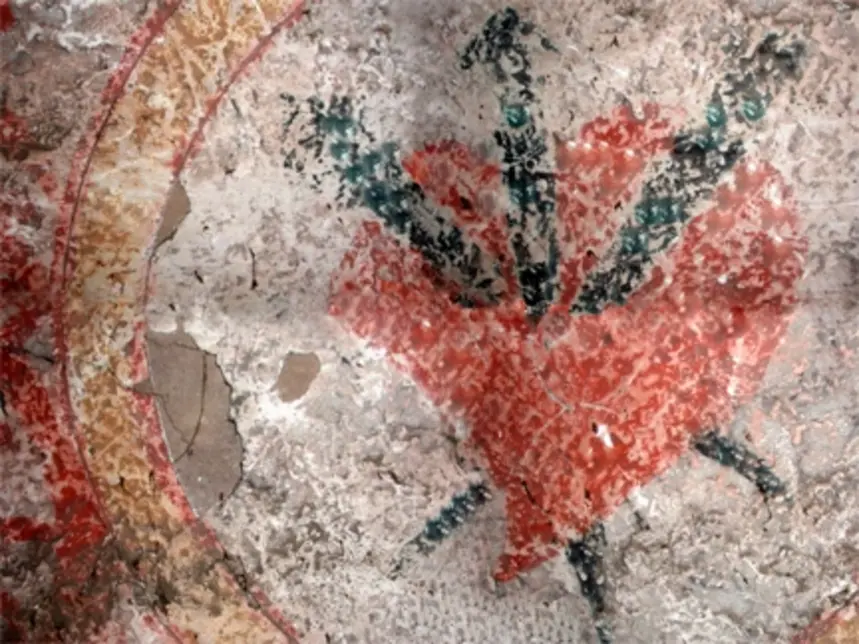
The Mission Dolores mural was created in 1791 by Ohlone artists and is housed in the Mission Dolores adobe chapel. Behind the old wooden altar, the mural covers the entire rear wall of the building. It has two statue niches and measures 22 by 20 feet. In 1796, the Franciscans installed a baroque-style relief sculpture called a reredos in front of the mural. In later years, the mural was covered up with wooden boarding. The mural was rediscovered during a renovation in 1910. Jesus’ and Mary’s Sacred Hearts are depicted in part of the mural. The mural also contains the image of a rooster, a Christian symbol of the resurrection of Jesus.
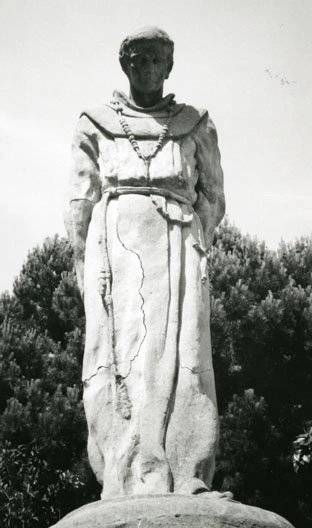
Junípero Serra statue
The Junípero Serra statue is located on the grounds of the Mission San Francisco complex. The cast stone sculpture was designed by the American artist Arthur Putnam and completed in 1909. It was cast between 1916 and 1917, and installed in 1918 when the mission was remodeled. Funding for the sculpture came from D.J. McQuarry and it cost $500 to cast. It is approximately 6 ft 6 in tall. The sculpture depicts Serra wearing a Franciscan friar’s robe belted at the waist with a knotted rope and a rosary around his neck. The base of the sculpture is made of concrete. It is one of a series of allegorical figures commissioned by the estate of E. W. Scripps to depict California history. In 1993 it was examined by the Smithsonian Institution’s Save Outdoor Sculpture! program. The program determined that the sculpture was well-maintained.
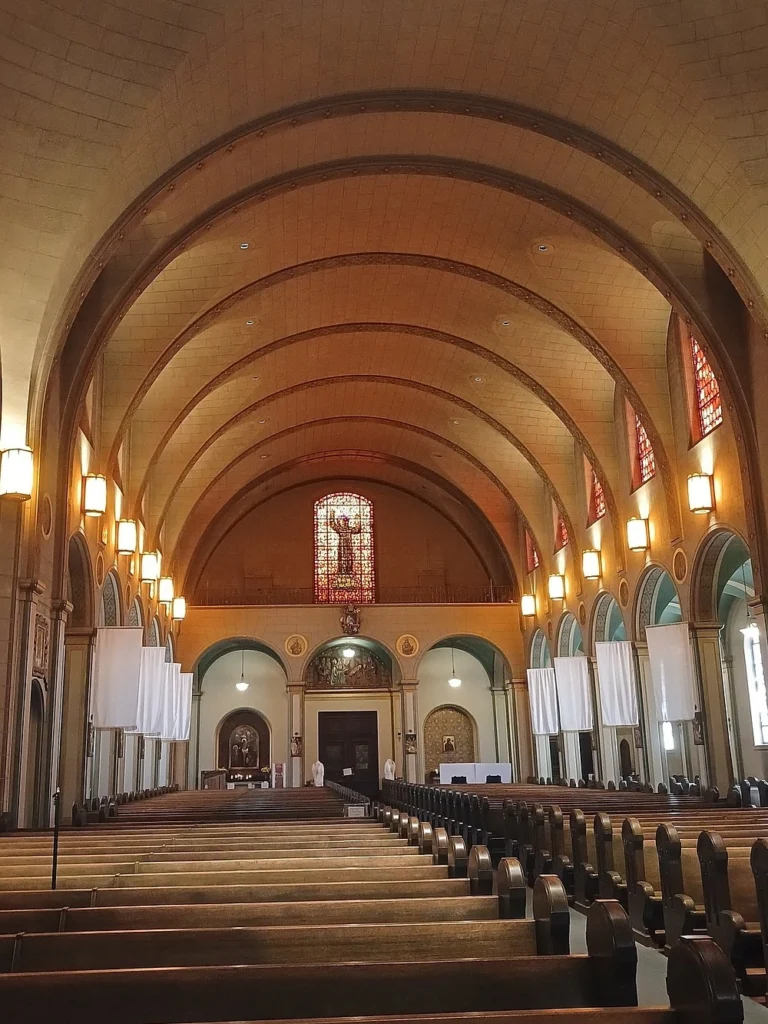
Francis of Assisi stained glass window
The Mission Dolores Basilica contains a stained glass window of Francis of Assisi, created by the German artist Franz Xaver Zettler at the time of the church’s construction.
Feast Day
Feast Day : 4 October
The feast day of Mission Dolores Basilica in San Francisco is celebrated on October 4th, honoring Saint Francis of Assisi, the mission’s patron saint. It’s a special day for the parish and the local community, marking both the spiritual and historical importance of the mission.
Church Mass Timing
Monday to Saturday : 8:00 AM, 5:00 PM.
Sunday : 8:00 AM , 10:00 AM , 12:00 PM.
Church Opening Time:
Monday : Closed
Tuesday to Sunday : 10:00 AM, 4:00 PM
Contact Info
Address : Mission Dolores Basilica
3321 16th St, San Francisco, CA 94114, United States
Phone : +1 415-621-8203
Accommodations
Connectivities
Airway
Mission Dolores Basilica, San Francisco, California, United States, to San Francisco International Airport (SFO), distance 17 min (11.9 mi) via US-101 S.
Railway
Mission Dolores Basilica, San Francisco, California, United States, to San Francisco Caltrain Station, distance between 10 min (2.4 mi) via 14th St and Townsend St.