Introduction
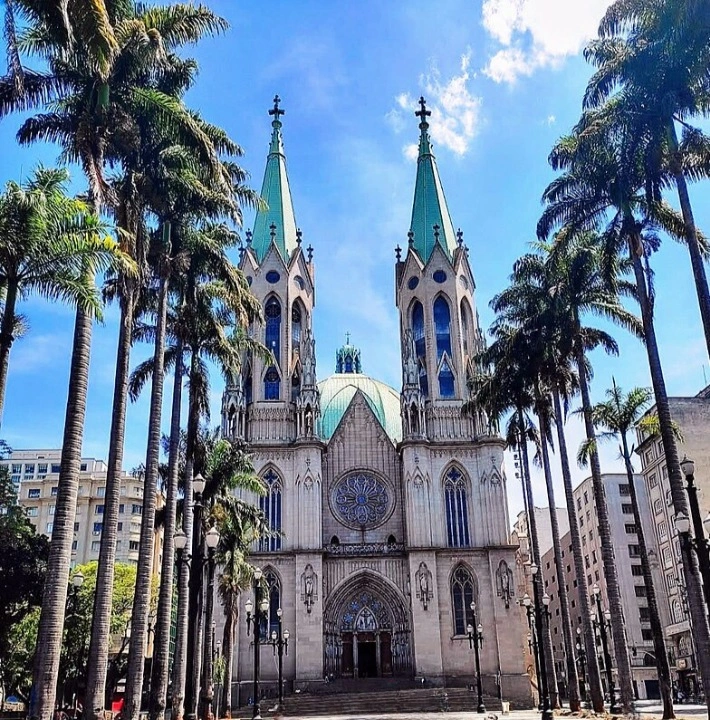
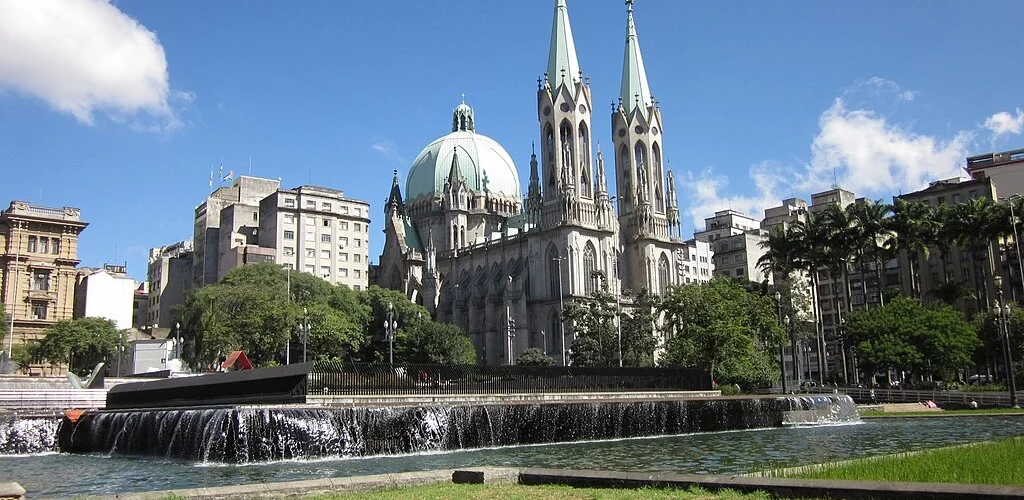
The Metropolitan Cathedral of Our Lady of the Assumption and Saint Paul, better known simply as the Cathedral of the Sé, is the main Catholic Church in the city of São Paulo, Brazil. It’s located right in the heart of the city, at Praça da Sé, one of the most important and historic squares in the downtown area. This cathedral is more than just a religious building it’s a symbol of São Paulo’s roots. The church belongs to the Archdiocese of São Paulo, and since 2007, it has been led by Cardinal Odilo Pedro Scherer, who was appointed by Pope Benedict XVI and took office in April that same year. The current cathedral, built in a neo-Gothic style, began construction in 1913. It took nearly 40 years to finish and was finally completed in time to celebrate the 400th anniversary of São Paulo’s founding a city that started out as a humble Jesuit mission led by Manuel da Nóbrega, José de Anchieta, and the native chief Tibiriçá. Even though its large dome stands out with Renaissance-style architecture, the cathedral is still considered one of the largest neo-Gothic churches in the world some even say it’s the fourth largest. Inside the crypt, you’ll find the remains of some key figures in Brazilian history, including Chief Tibiriçá, Father Bartolomeu Lourenço de Gusmão, and Regent Feijó. The church also serves as the main parish church for Our Lady of the Assumption of São Paulo, which was officially established way back on August 10, 1591. Today, it’s not just a religious landmark but also one of the Seven Wonders of Brazil, admired for its architecture, scale, and deep connection to the city’s past.
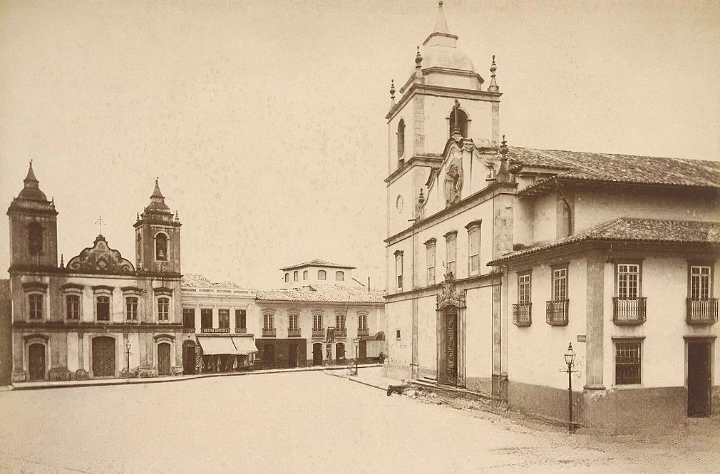
First church
The history of São Paulo Cathedral begins in 1589 , when it was decided that a main church (Matriz) would be built in the small village of São Paulo de Piratininga . This church, located where the monument to Father Anchieta, a sculpture by Heitor Usai, stands today in Praça da Sé, was completed around 1616. São Paulo became the seat of the diocese in 1745, and from that date, the old church was demolished and replaced by a new one, built in the Baroque style , completed around 1764. This modest church would remain the cathedral of São Paulo until 1911 , when it was demolished. Its front faced Quintino Bocaiúva Street.
Neo-Gothic cathedral
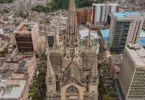
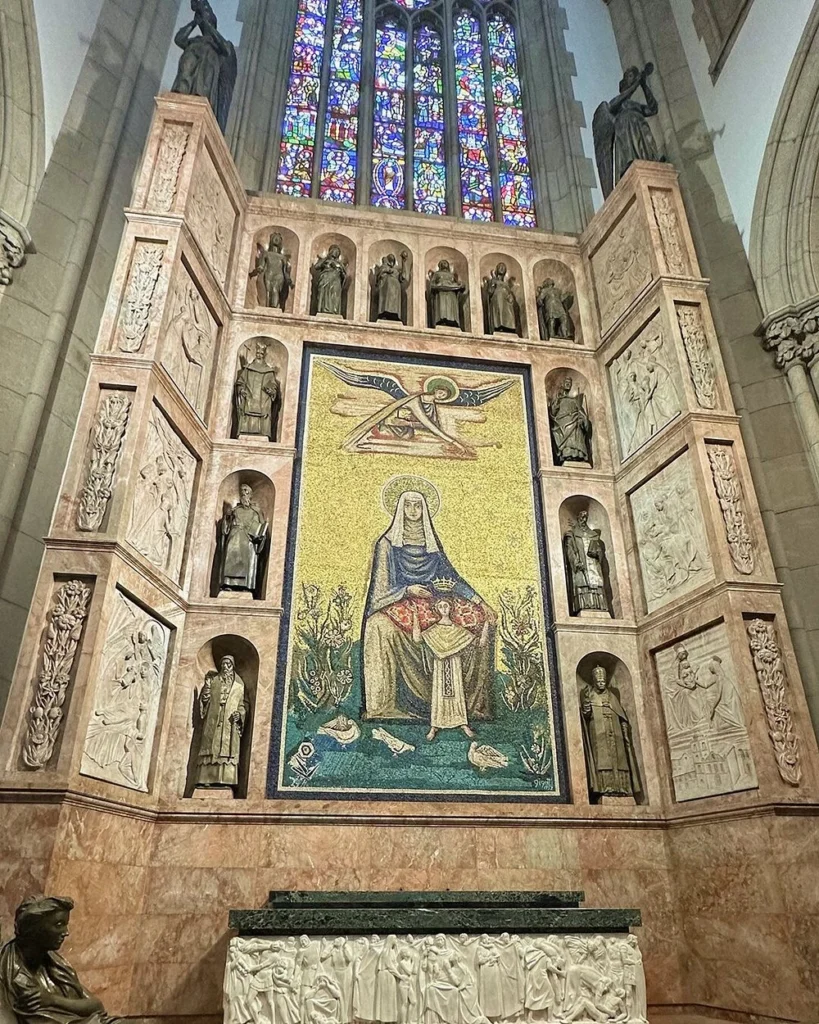
The current cathedral was built at the initiative of Dom Duarte Leopoldo e Silva, the first archbishop of São Paulo. Work began on July 6, 1913 on land ceded by the city hall in exchange for the land of the Old Cathedral and the church of São Pedro dos Clérigos, in the blocks above, in front of the current Praça Doutor João Mendes. The architect in charge was the German Maximilian Emil Hehl, who designed a huge church in an eclectic style, featuring several elements of distinct styles, such as the dome and the pointed arch, but clearly predominating in neo-Gothic, inspired by the great medieval European cathedrals. All the mosaics, sculptures, and furniture that make up the church were brought by ship from Italy. However, due to the world wars, there were great difficulties in completing the work. Thus, the inauguration of the new cathedral took place only in 1954, with the towers still unfinished, but in time for the celebration of the fourth centenary of São Paulo, on January 25. The towers were inaugurated on November 15, 1969. The work was initially led by Alexandre Albuquerque, and, from 1940, by Luís Inácio de Anhaia Melo .
Restoration
The cathedral, although its front towers and dome were completed by the 1960s, had not been completed according to the original design. The building had also not been maintained since its official inauguration in 1954. The cathedral was completely renovated between 2000 and 2002; in order to repair the building and complete the original design, many of the pinnacles above the nave and the turrets were completed. Copies of the turret sketches, dated 1912, were found in the cathedral choir, allowing a faithful restoration to the original design. The restoration included repairs to the stained-glass windows, revitalization of the bells, maintenance of the plumbing and electrical systems, resolution of problems that threatened the structure such as four kilometers of cracks, as well as leaks and washing and painting the building. The restored cathedral gained 14 new turrets, as envisioned in the original 1912 design by Maximilian Emil Hehl. In 2002, it reopened its doors after renovations that cost R$19.5 million.
Architecture of Metropolitan Cathedral of Our Lady Assumption and Saint Paul, Sao Paulo, Brazil
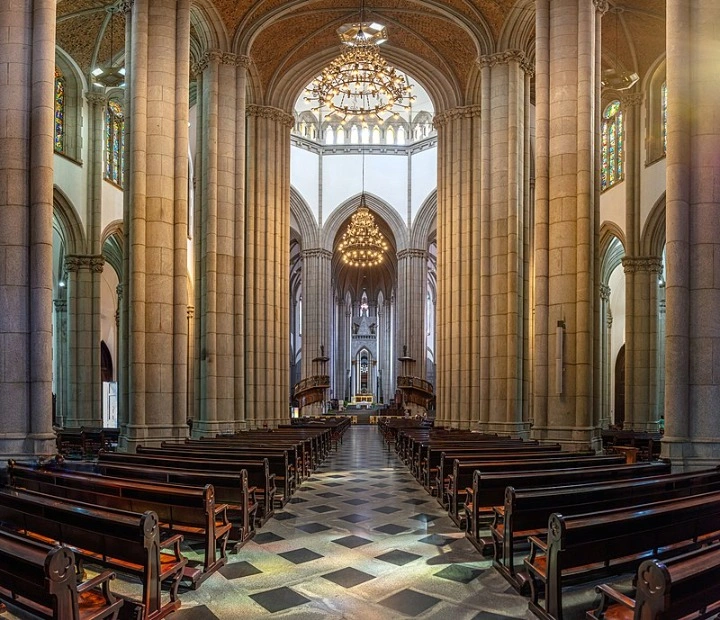
Architect: Maximilian Emil Hehl.
Architectural style: Gothic Revival architecture.
Burials: Paulo Evaristo Arns.
The Catedral da Sé isn’t just the main Catholic church in São Paulo it’s also a giant. The building stretches 111 meters in length, 46 meters wide, and its two front towers shoot up to 92 meters high. At its highest point, the dome stands 30 meters above the central crossing. Inside, there’s room for up to 8,000 people, making it one of the biggest churches in Brazil and even the world. Only the massive Templo de Salomão, a Pentecostal church also in São Paulo, is bigger locally. Architecturally, the cathedral follows a Latin cross layout, with five Naves and a large dome sitting right at the intersection of the cross. The overall style is neo-Gothic, which was popular in Brazil at the time construction began. You’ll see all the classic Gothic elements tall spires, pointed arches, and a grand rose window over the main entrance. But the dome? That’s where things get interesting. It breaks from the Gothic theme and instead takes its inspiration from Renaissance architecture particularly the famous dome of the Florence Cathedral in Italy. The building covers a floor area of about 6,700 square meters, sitting on a site of roughly 5,300 square meters right in Praça da Sé the historic and symbolic center of São Paulo. More than 800 tons of rare marble were used to finish the interior, and if you look closely, the attention to detail is incredible. The column capitals inside aren’t just decorative they celebrate Brazil itself. You’ll spot carvings of coffee branches, pineapples, and even local animals like the tatu (armadillo), giving the space a unique, local identity.
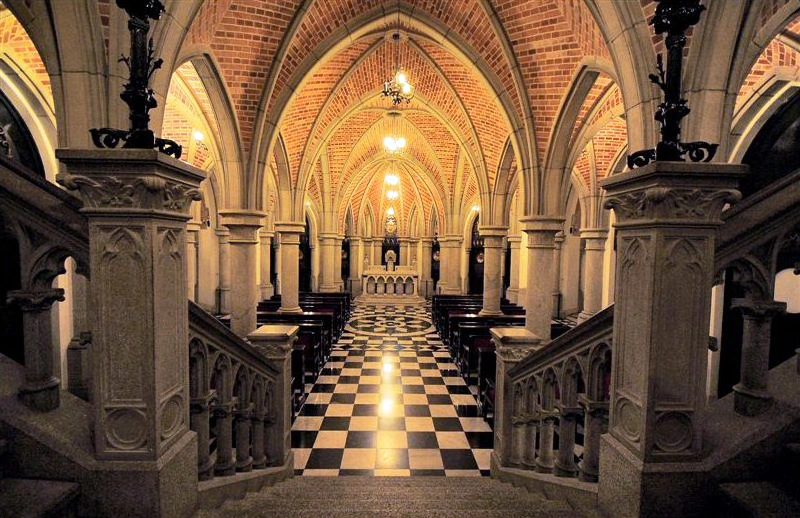
Crypt
The crypt, located below the main altar, is very large and can be considered an underground church in its own right. It is decorated with marble sculptures by Francisco Leopoldo e Silva depicting the history of Job and St Jerome. The crypt has the tombs of all bishops and archbishops of São Paulo. Of special note are the bronze tombs of two important historical figures: Father Diogo Feijó and the cacique Tibiriçá. Feijó was regent of Brazil during the infancy of Emperor Pedro II. Tibiriçá was the cacique (chieftain) of the Guaianás tribe who, in the 16th century, welcomed the first Jesuits to the Piratininga Plateau and whose aid made the foundation of São Paulo possible. In 2004, the human remains of Bartolomeu de Gusmão (1685–1724), a Jesuit from the former Portuguese colony of Brazil and innovator of lighter-than-air airship design, were transferred to the crypt.
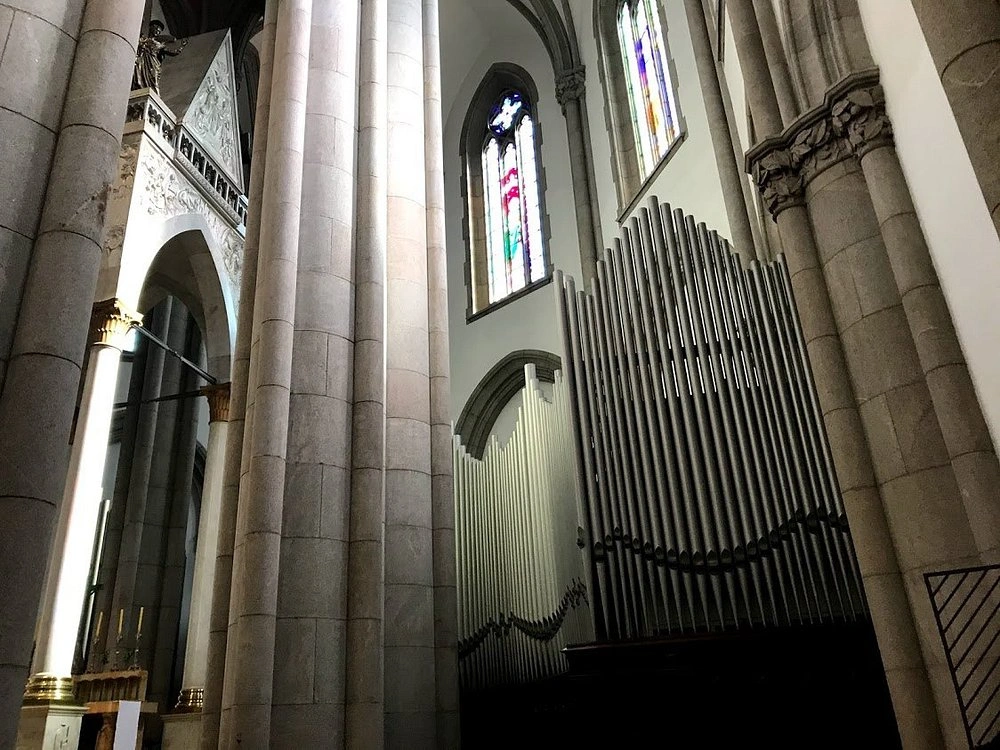
Organ
The cathedral organ was built in Milan by the Italian firm Balbiani & Rossi in 1954. Its inauguration took place on November 25, 1954, on Thanksgiving Day, donated by the Antárctica company (now AmBev ). Its restoration was carried out between 1996 and 1997 under the sponsorship of the Banco Real . The instrument has two bodies and a “console” (keyboard table), placed behind the columns surrounding the high altar, with five keyboards (each with 61 keys) and a pedal board. It has approximately 12,000 sounding pipes and 124 stops, of which 112 are real stops. Each keyboard has five fixed sound combinations and six manually adjustable combinations. Regarding phonics, the organist has at his disposal a sound complex of peculiar timbres. It is the largest pipe organ in Brazil and Latin America.
Carillon
The east tower contains a carillon of 61 bells, cast by the Petit & Fritsen bellfoundry of the Netherlands and installed in 1959. It is the largest and heaviest carillon in Central and South America.
Window frames
The window frames were made in granite, by a stonework company called Palici-Baccaro, founded by family members of Italian immigrants in the 1940s, having as partners Angelo Palici and João Baccaro, located at Oratório street, near Fernando Falcão street, region of the Mooca, São Paulo, Brazil, that later would give origin to Baccaro Marbles and Granites, traditional company in the local market.
Feast Day
Feast Day : 15 August
The Metropolitan Cathedral of Our Lady Assumption and Saint Paul in São Paulo, Brazil, is a stunning Neo-Gothic landmark and the seat of the Archdiocese. Its main feast is the Assumption of Mary on August 15th, while it also honours Saint Paul on June 29th.
Church Mass Timing
Monday to Saturday : 12:00 PM
Sunday : 09:00 AM, 11:00 AM, 04:00 PM.
Church Opening Time:
Monday to Sunday : 07:30 AM, 06:30 PM
Contact Info
Address : Metropolitan Cathedral of São Paulo
Sé Square – Sé, São Paulo – SP, 01001-000, Brazil.
Phone : +55 11 3107-6832
Accommodations
Connectivities
Airway
Metropolitan Cathedral of Our Lady Assumption and Saint Paul, Sao Paulo, Brazil, to São Paulo/Congonhas–Deputado Freitas Nobre Arpt (CGH), distance 27 min (10.4 km) via Corredor Norte-Sul.
Railway
Metropolitan Cathedral of Our Lady Assumption and Saint Paul, Sao Paulo, Brazil, to Tamanduateí, Av. Presidente Wilson, distance between 16 min (7.5 km) via Av. do Estado.