Introduction
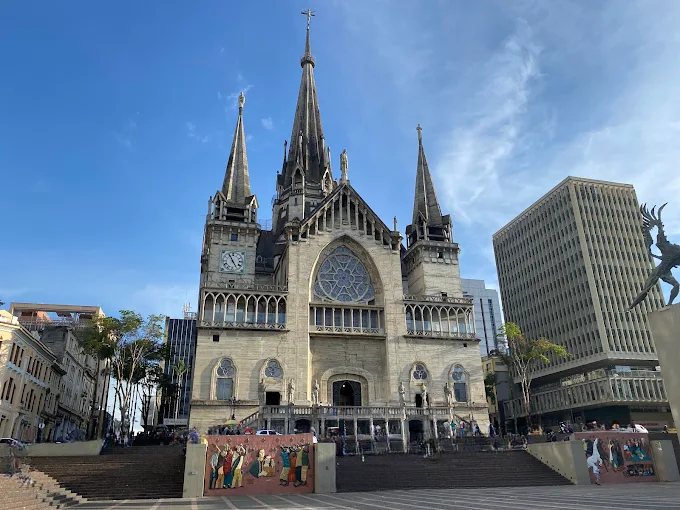
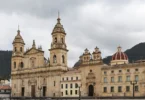
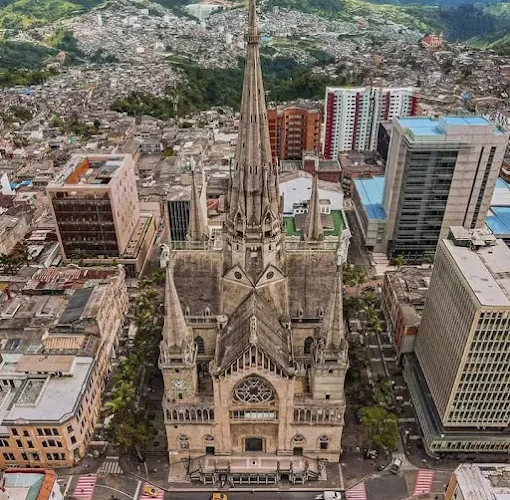
The Cathedral Basilica of Our Lady of the Rosary (Spanish: Catedral Basílica Metropolitana de Nuestra Señora del Rosario), also called Manizales Cathedral, is a Catholic cathedral, Metropolitan Cathedral Basilica of Our Lady of the Rosary of Manizales is a Catholic church located opposite Bolívar Square in the city of Manizales , Colombia . At 117 m tall from the base of the church on Carrera 22, it is the tallest cathedral in Colombia and rivals the Basilica of the National Vow in Quito, Ecuador , for the title of tallest in Latin America and the tallest neo-Gothic church in the Americas . This information was obtained after the removal of the aluminum cross erected in 1992 and the installation of a new cross with a crucifix in 2017. Furthermore, it was the tallest building in Colombia for 33 years: between 1936 and 1969. The architectural design was by Julien Polti , the chief architect of Parisian historical monuments , and the Italian firm Papio Bonarda & Co. , founded by Angelo Papio and Gian Carlo Bonarda, was responsible for the construction. The cathedral has an area of 2,300 square meters and a capacity of 5,000 people. It features a majestic baldachin (canopy supported by columns) over the main altar. Guided tours are available, led by several specialists, and last approximately 75 minutes.
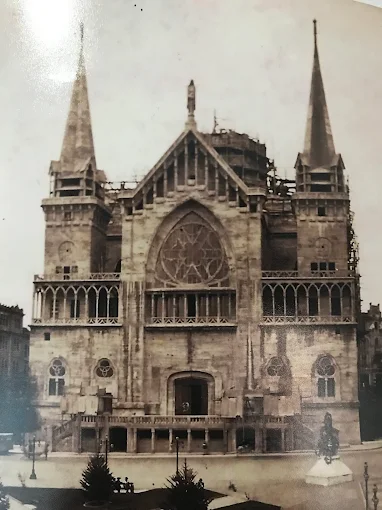
Previous Temples
First temple
On October 12, 1849, the State of Antioquia granted permission for the creation of the parish district of Manizales, for which it was an obligation that the town had a temple and a priest, for this purpose the first chapel was built in the center of the municipality (the place that the Cathedral currently occupies), this chapel measured 8 meters long by four meters wide in wood and straw, it was demolished in 1854; the first priest of Manizales was the priest Bernardo José Ocampo. In 1854, construction began on the first parish church, using wood, adobe, and lime mortar – materials common throughout Antioquia at that time. This church was completed in 1869. Father Ocampo began its construction, and Father José Joaquín Baena finished it. Due to several earthquakes, this church was demolished by Father Gregorio Nacianceno Hoyos in 1886. It measured 15 meters wide by 64 meters long.
Second temple (First Cathedral)
On August 26, 1888, construction began on the second parish church, commissioned to the Bogota architect Mariano Sanz de Santa María . It was completed in 1897 and became the first cathedral in 1900, when Pope Leo XIII created the diocese of Manizales, and was inaugurated in March 1901. Two fires would attack the Cathedral, the first, on July 3, 1925, which was stopped by the great efforts of the people of Manizales and the second -fatal- on March 20, 1926, which totally destroyed it. A replica of this cathedral is currently preserved in the Chipre neighborhood of Manizales.
Current cathedral
First competition
On March 24, just four days after the disaster, the Bishop of Manizales, Monsignor Tiberio de Jesús Salazar y Herrera, convened the first reconstruction committee. This committee was composed of Aquilino Villegas, Rafael Genaro Mejía, Manuel Felipe Calle, Father Luis Carlos Muñoz (parish priest of the Cathedral), the Bishop himself, and Father Adolfo Hoyos as secretary. The initiative of this board was widely supported throughout the city. The search for an architect to design the reconstruction project was the next stage. To this end, a national competition for the submission of plans was initially launched in 1926, but it yielded no results and was declared void because the proposals did not meet the Board’s aesthetic, technical, and economic requirements.
Second competition
Due to the limited results of the local competition, two Manizales natives residing in Paris, Miguel Gutiérrez A. and Victoriano Arango, were approached to organize a competition in that city. It was held there in 1927, with a jury comprised of Genuys, Inspector General of Historical Monuments of France; Paquet, Comptroller General; and Blachette, builder and inspector of religious buildings. The architect Julien Polti was declared the winner.
Construction
The plans arrived in Manizales at the end of 1927 and construction began on February 5, 1928. The cornerstone was laid by Monsignor Tiberio de Jesús Salazar, then Bishop of Manizales. Construction was halted in the late 1920s and early 1930s due to the global economic crisis. Work resumed on February 7, 1935. During this phase, the four side towers were built, and the vaulted roofs were constructed. This construction period was completed in December 1936. In 1938, the Cathedral withstood an earthquake during its construction phase, which caused some minor damage to the structure. Construction was fully completed on September 29, 1939.The cathedral is built of reinforced concrete. It is a pioneering work in the use of this method, since at the time of its construction, this system had only been known for twenty years. The Cathedral has withstood three major earthquakes, in 1962 (where one of the towers collapsed and was later rebuilt between 1989 and 1990), 1979 and 1999.
Proclamation as a basilica
On December 23, 1951, Pope Pius XII granted the title of Basilica , through a document read in front of the city’s governmental, civic and educational institutions. This cathedral remains intact and has withstood all the challenges it has faced. The Manizales Cathedral is a great National Monument and has been a great success.
Proclamation as a National Monument
The Cathedral was declared a National Monument in 1984, during the government of President Belisario Betancur .
Architecture of Cathedral Basilica of Our Lady of Rosary, Manizales, Colombia
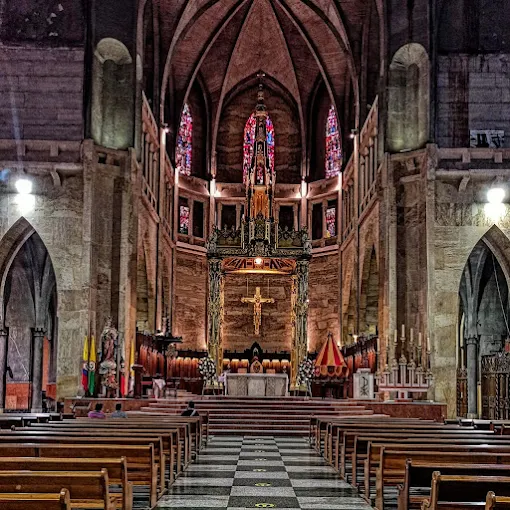
Architect : Julien Polti.
Architectural style: Neo- Gothic Revival architecture.
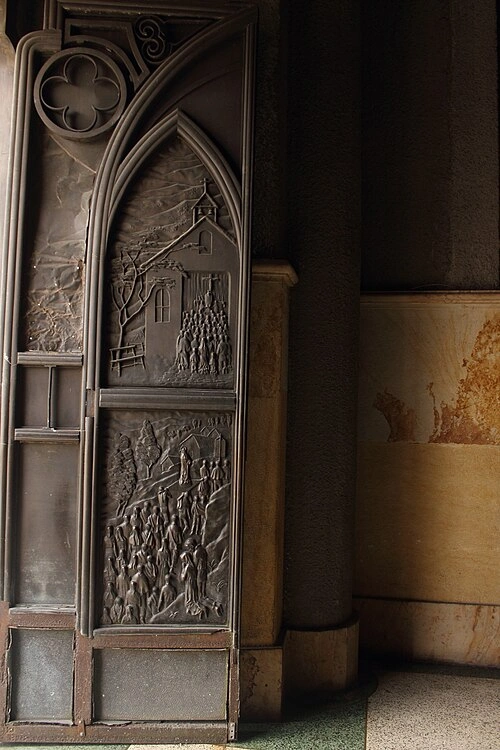
The Cathedral was built of reinforced concrete, with an area of 2,300 m² and a capacity for 5,000 worshippers. It has a central tower 115 m high, which houses the Polish Corridor, and four lateral towers, each 62 m high, named after Saint Paul, Saint Agnes , Saint Mark , and Saint Francis . These towers remained standing until 1962, when an earthquake struck the city and toppled the Saint Francis tower, which remained in that state for 26 years until its reconstruction. Currently, the images crowning the lateral towers are Saint John the Baptist, Saint John Vianney, Saint Peter Claver, and Saint Rose of Lima. The main doors of the Cathedral are made of bronze and designed by Leopoldo del Río. They depict the most important historical events of the city: its founding, its first church, and the earthquakes and fires that affected the city up to 1926. The temple has a Greek cross plan, three naves, a presbytery with a decorated baldachin for the main altar, and a choir for the canons. Most of the elements of this cathedral are part of Gothic architecture, although it has some Byzantine and Roman details.
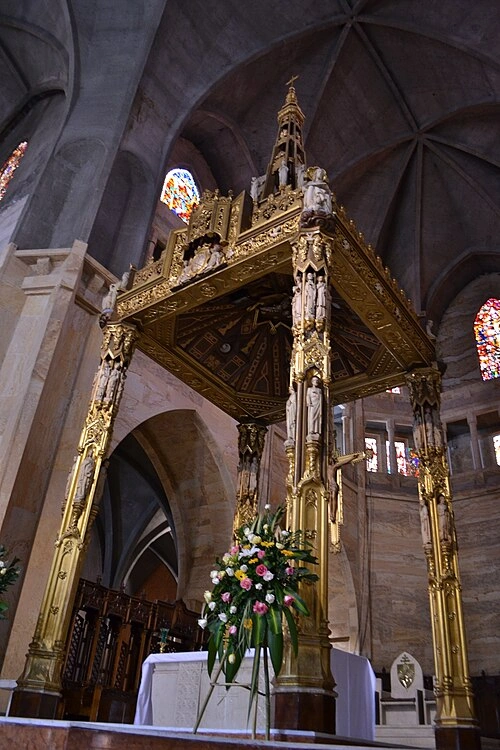
Baldachin
To enhance the altar , this 14-meter-high, gilded baldachin was made , which has 64 images of saints on its column, representing the celestial court and the communion of saints. The saints depicted, positioned around the four columns, were carved from wood, each in a different pose illustrating the arrival of the deceased in heaven. Each was carved separately. The baldachin was designed in New York by the Rambusch firm and crafted in Italy by the Stuflessu house of Ortisei, province of Bolzano. It is built with an iron frame , lined with wood . It was assembled by Hernando Carvajal and coated with gold leaf (the coating was made of gold foil ) by Manuel Vargas. It was moved on October 24, 1990, along with the altar, 12 m forward, from the original site, to the place they currently occupy.
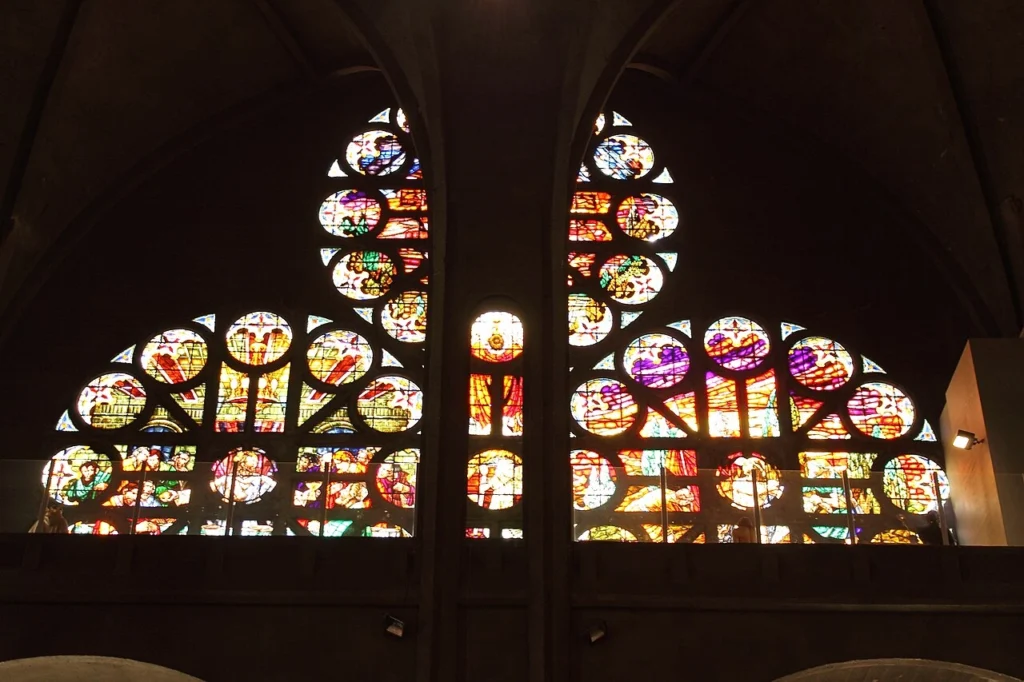
Stained glass windows
The Manizales Cathedral Basilica houses a collection of stained glass windows, totaling 141 distributed across its various floors, in addition to the 3 rose windows (one front and two side). Some of these windows are composed of more than 300 panes of glass, covering a total area of approximately 1000 m², and include works by French, Italian, and Colombian artists. The most important stained glass windows in the cathedral are the following:
- Stained glass window of the Last Supper : it represents the dinner that Jesus had with the twelve disciples.
- Stained glass windows of Abraham and Melchizedek : depicts Abraham at the moment of sacrificing his son Isaac ; Melchizedek also appears offering wine and bread.
- Stained glass window of the rich man and Lazarus: it represents the biblical passage from the Gospel of Saint Luke.
- Stained glass window of the foolish and wise virgins: it represents the Parable of the Ten Virgins from the Gospel of Matthew.
Rosette
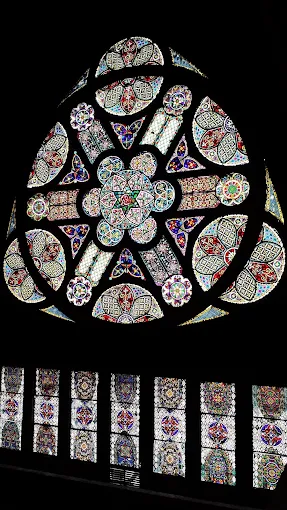
The main rose window is located above the main door that faces Bolívar Square, it replaced another one dedicated to the Holy Trinity, installed there in the early 1960s, which was made in a temporary workshop located in the crypt of the cathedral by the Catalan artist Ismael Font. In 1968, Archbishop Duque Villegas ordered its dismantling, arguing that its composition was unfortunate and its colors too striking, so it was replaced by a rose window of geometric patterns in the style of a kaleidoscope designed by Mario de Ayala in Cali, which evokes the Virgin of the Rosary. Mario de Ayala also created the side rose windows in the Velasco House in Cali, based on designs by Alberto Martorell, from the Paris Academy of Arts, and Leandro Velasco, winner of the competition for the installation of the stained-glass windows in Washington Cathedral . These evoke the Redemption and the Incarnation.
Arches
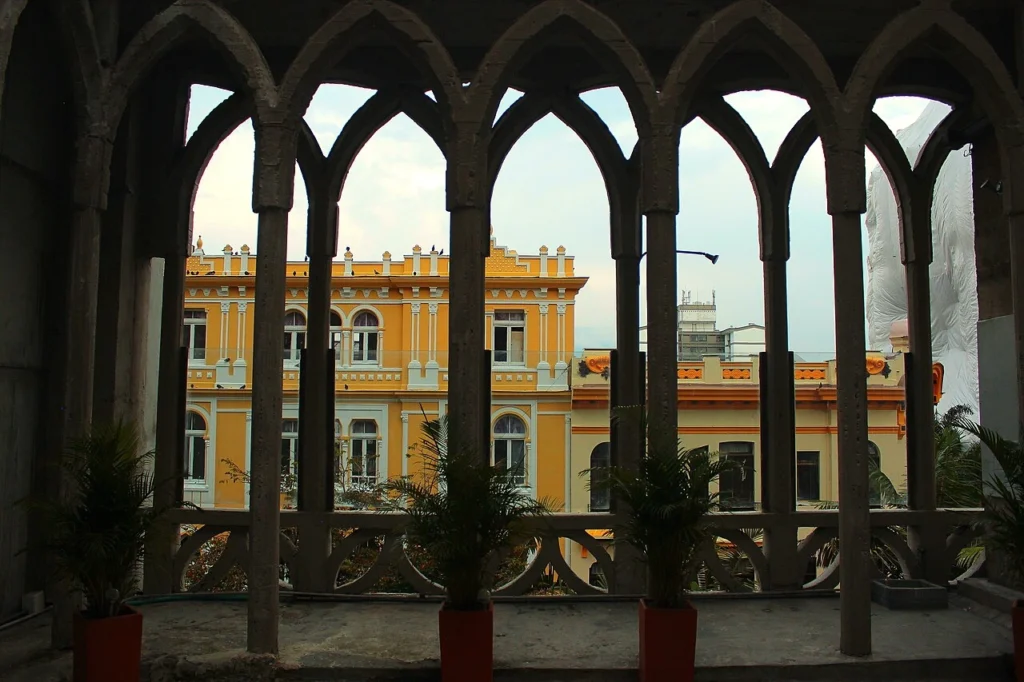
The cathedral features semicircular arches or vaults characteristic of the Romanesque style. These same arches, when they intersect (as in this case), are characteristic of Byzantine art. It also has pointed arches, in the shape of an ogive, and the lines that seek the elevation of the temple, offering space for the stained glass windows, correspond to Gothic art.
Sculptures
The Cathedral has four side towers crowned by sculptures of Saint John the Baptist , Saint John Vianney , Saint Peter Claver and Saint Rose of Lima .The main atrium above Bolívar Square is composed of 6 sculptures made of ferroconcrete, and with a height of 2 m, which represent the 4 evangelists, Saint Matthew , Saint Mark , Saint Luke and Saint John in the center, made by the Italian sculptor Alideo Tazzioli Fontanini, and at the ends by Saint Peter and Saint Paul made by the master Gonzalo Quintero Castaño and his student Guillermo Botero Gutiérrez.
Doors
On July 14, 1963, the central door of the cathedral was inaugurated, designed by the Jesuit priest Eduardo Ospina Bernal, with drawings of the molds by Ismael Font and cast in bronze by Leopoldo del Río Pérez. The weight of this door is 5 tons. A beautiful sculpture called “the dream of the cathedral” shows, among other things: the Virgin of the Rosary, the current cathedral, the first parish church and its demolition, the construction and burning of the first cathedral. The western door, called “The Parish” shows: the Mass, the preaching, the procession, the viaticum; the eastern door offers the theme “The Caldas Municipality” with four paintings showing: the Mayor, the Municipal Council, the town crier and the market square, made by Leopoldo del Río Pérez.
Polish Corridor
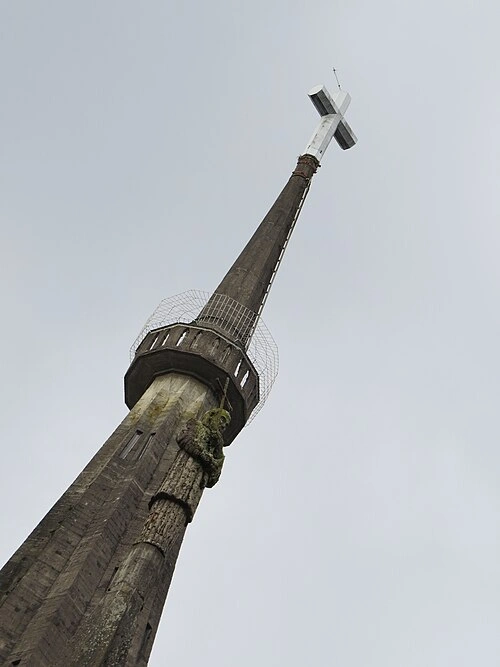
The Polish Corridor , as its name suggests, is a corridor located at the top of the central tower. It is situated 102 meters high, offering a panoramic view of the entire city. It was opened to the public in mid-1959 but closed in 1977 due to inadequate safety measures and the poor condition of its wooden staircases, which were approximately 30 cm high and 40 cm wide, narrowing as one ascended. It was reopened to the public in 2008 after a complete overhaul of its safety features, including the construction and lighting of new staircases, at a cost of approximately $ 100,000 . Currently, tours are offered to the Polish Corridor, where visitors will have a 360° view of the city of Manizales. The tours include access to the stained-glass windows on the second and third levels, which were closed to the public until 2013. Visitors can also now see the clock tower. Opening hours are daily from 9:30 a.m. to 6:30 p.m., including Sundays and holidays.
Feast Day
Feast Day : 07 Ouctober
The Cathedral Basilica of Our Lady of the Rosary in Manizales, Colombia, celebrates its main feast day on October 7th, which is the universal Catholic date for the Feast of Our Lady of the Rosary, commemorating the Battle of Lepanto. While specific local celebrations might vary slightly, this is the primary day honoring the Virgin Mary under this title for the basilica.
Church Mass Timing
Monday to Saturday : 7:00 AM, 12:00 PM, 5:30 PM, 7:00 PM.
Sunday : 7:00 AM, 10:00 AM, 12:00 PM, 5:30 PM, 7:00 PM.
Church Opening Time:
Monday to Sunday : 6:30 AM, 6:00 PM
Contact Info
Address : Cathedral Basilica of Our Lady of the Rosary
plaza de Bolivar, Cra. 22 #24-13, Manizales, Caldas, Colombia.
Phone : +57 68831880
Accommodations
Connectivities
Airway
Cathedral Basilica of Our Lady of Rosary, Manizales, Colombia, to Manizales (La Nubia) Airport, distance 2h 46m (99.8 km)via Padua-Letras and Letras-Manizales.
Railway
Cathedral Basilica of Our Lady of Rosary, Manizales, Colombia, to Mariquita Railway Station, distance 1h 56m (67.9 km) via Vía A Pensilvania and Mariquita-Fresno.