
Introduction
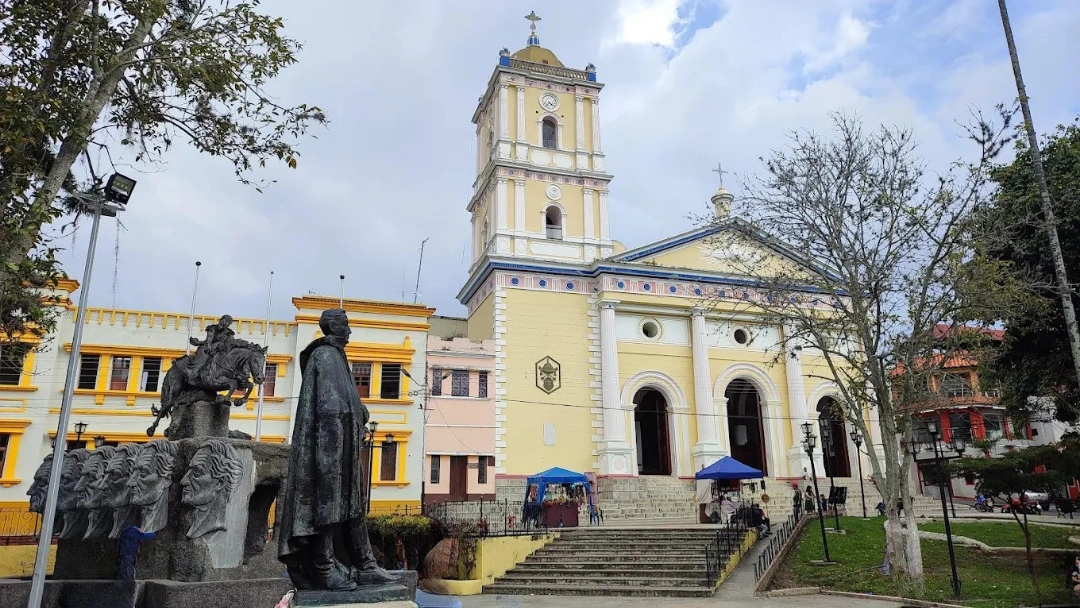
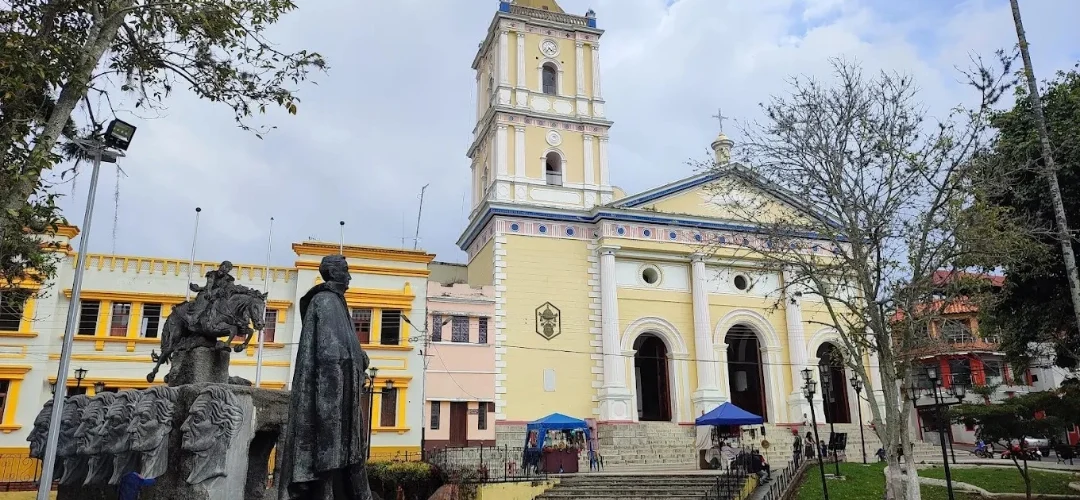
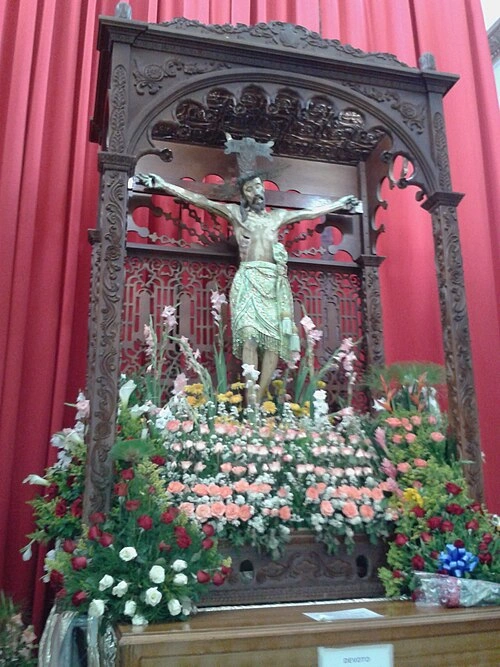
Basilica of the Holy Spirit – is the Basilica of La Grita, a Catholic church, built in 1886, with the status of a minor basilica. It is situated in the Plaza Bolivar of La Grita, capital of Jáuregui in the Táchira state, in the Andes of the South American country of Venezuela. The Basilica of the Holy Spirit houses the sacred image of the Holy Christ of La Grita. It has a rectangular floorplan with a tower that is completed with a dome half circle, with concrete walls, blocks of clay and cement. The windows have varieties of stained glass, carved wooden doors and granite floors. The interior of the basilica presents three naves and a dome on the altar, that is marble; its 20 Gothic columns divide the ships.
The façade and tower of the church were constructed by priests Álvaro Fonseca and Jeremías González; Monsignor Acacio Chacón finished the work in 1915. The stained-glass windows were placed by Priest Eloy Contreras in 1949. In 1937, General José María García donated to the church the beautiful clock that it displays today. The Chapel of the Holy Christ is the work of Priest Raúl Méndez Moncada, who had the alms of the faithful and the generous collaboration of Dr. Alberto Díaz González, who donated the marble altar, the throne of the Holy Christ, and the communion rail, donated by Drs. Rafael Recao and Rafael Sanoja. The work was concluded in 1956. It was Monsignor Alejandro Fernández Feo, Bishop of the Diocese of San Cristóbal, who gave the orders for the remodeling of the Church of the Holy Spirit in La Grita, befitting the holy place and the piety of the faithful, as it houses one of the most precious relics of Christian devotion in our town: the Holy Christ of La Grita. Work started on January 7, 1959.The wooden roofs of the old buildings had been changed to iron ones, while the mossy tiles that covered the religious site for a long period of time had been kept. The sidais and the chancel arch had been improved, while the columns had been improved and adorned with the beauty of fluting in a manner that makes them slender and more beautiful. Once the structural work had been done, the difficult task of interior decoration had then been done. Slowly, the beautiful ceiling of the building had been produced, which had rosettes, rhombuses, and beams of old Renaissance palaces and temples. The arches had gained beauty through the beautiful archivolts, while the columns had been topped by capitals, which are precious medallions containing Eucharistic scenes and which complete the beauty of the interior of the church. The priest had necessarily come along with the founder.Companion in adversities and labors, with the cross raised in one hand and sometimes the sword in the other. At the same time that the plaza and the future streets were marked at the foundation, the site where the church would rise was designated. In 1581, Father Diego Machado was the vicar of La Grita. He probably built the first chapel of the town, and next to this humble chapel that served as a meeting place for the faithful, the Franciscan convent was standing. The Franciscans had arrived in the city of La Grita, City of the Holy Spirit, around 1580, and their oratory was used frequently to congregate the faithful for the teachings of God, especially the most vulnerable, like the Indians.There was a tremendous earthquake on the 3rd of February of the year 1610 at three o’clock in the afternoon which destroyed the greater part of the town, as well as the Franciscan convent church and the small church of the village. Father Arias Valdés began the construction of the church or the chapel to substitute the destroyed church.
In 1657, Father Juan de Figueroa served as parish priest. He undertook the construction of a much larger and more permanent church, which was completed by 1697. The Archbishop of Bogotá , Friar Ignacio de Urbina, informed the king of its completion on May 20th of that year. On June 24, 1827, another earthquake struck, destroying what little remained standing from the 1812 earthquake and preventing the celebration of liturgical services in the ruins. Work on the church resumed, initially under Father Estella in 1829, and was completed by Father Fernando García in 1836. This church had only one nave and was of very imperfect construction. In the mid-1880s, this church was demolished to build a new one.”The first construction of the church was supervised by Father Nieves de Jesús Rojas, later by Monsignor Manuel Jáuregui, and later again by Father José de Jesús Espinoza, who in 1911 reported on the condition of his Vicariate “that the church was completed, and the construction of the atrium and tower is underway. “The architectural designs of the church were made by master builder Ramón Pino F., and was executed by architect Esteban Rangel. Indeed, the presbytery and choir of this church had undergone a magnificent change, which was made possible by the expert hands of the people responsible. “The dome was reinforced with elegant ribs which climb up to the inside of the dome itself, ending in one magnificent rose window. There is also a marble altar donated to the church by the Ministry of Justice. “A marble plaque affixed to the baptistery reads thus: ‘The generosity of the people of La Grita made the reconstruction of this church possible.'”The sons and daughters of La Grita in other parts of the country donated the granite floor, and the master builder of this project was Mr. Luis Eduardo Carrillo, who dedicated his heart and soul to this temple—a source of pride for the Catholic Church and the people of La Grita. After the completion of the construction, the temple was consecrated on August 5, 1963, by the blessings of the chaplain, Monsignor Alejandro Fernández Feo, who was delighted to witness the miracles that could be accomplished through the generosity of the faithful and the competent administrations of their spiritual leaders. It was through the efforts of Monsignor Méndez Moncada, and so the Church of the Holy Spirit of La Grita, the Basilica of the Holy Spirit. The Basilica of the Holy Spirit was established as a National Historical Heritage Site through official gazette number 26,320 of August 2, 1960.
Architecture of Basilica of the Holy Spirit, La Grita, Venezuela
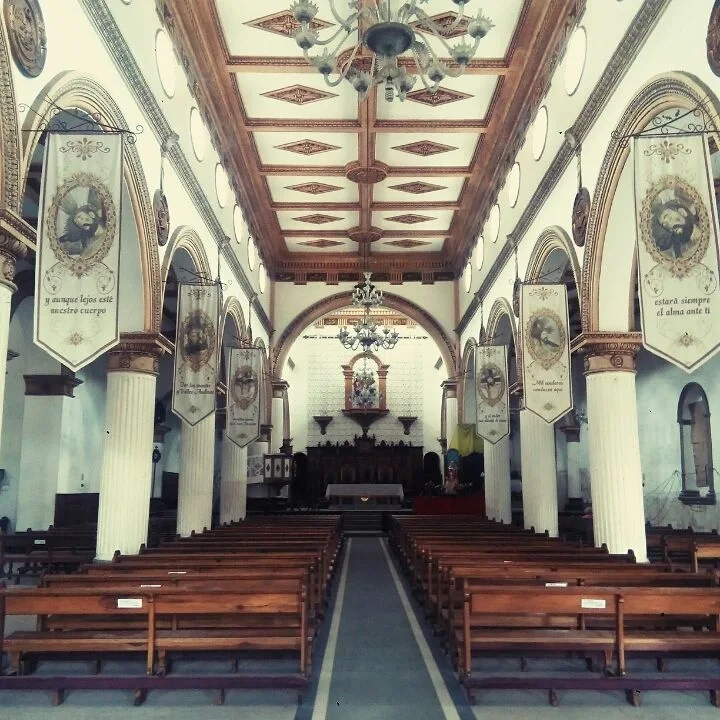
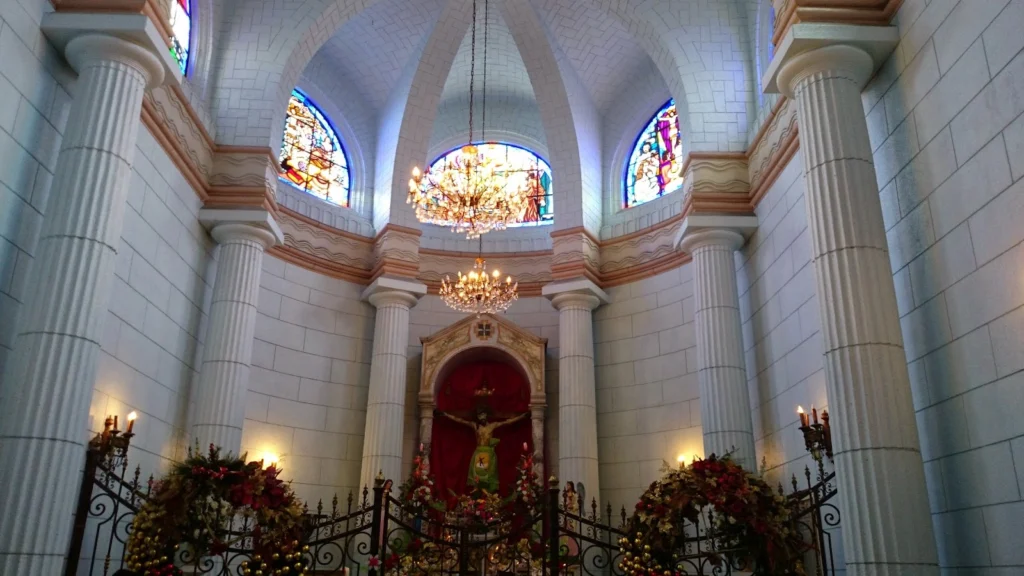
Its floor plan is rectangular and consists of a main part and a tower with a semicircular dome. The building is made of concrete, clay blocks, and cement. Windows are composed of a variety of stained glass. Also, doors are made entirely of wooden carvings. Its floors are made entirely of granite. In terms of interior features, it has three naves and a dome over its marble altar. These are twenty Gothic columns separating its naves. Also situated inside a room found on the left side is the Sanctuary of Holy Christ, constructed in 1886. Its features are a dome with a frame composed of ten Doric columns, topped with a variety of stained-glass windows that allow sunlight inside. There is a marble altar inside a Chapel that has a semicircle form with a semi-domed part, where a statue called Holy Christ of la Grita is placed. Devotees visit this part of the church for petitions and thanks for answered prayers. Some devotees demonstrate faith and walk along the chapel on bended knees from inside the church entrance.
History of the Holy Christ of La Grita
As a pledge for this faith, in 1610 Friar Francisco de Orellana carved the body of Jesus with his own hands from a log of cedar, and often, he would get tired. This was his promise to Christ in order that he stop the earthquakes in this mountainous region of Táchira, which on February 3, 1610, almost destroyed the village of Tadea. Thus, the tired friar was unable to sculpt the face of Christ with his tools. His discouragement grew, until one night, when he saw an angel shaping the log, and in its place was serenity in the form of a face. The legend says that the friar “Contemplated in ecstasy the work of the angel: a beautiful face, joyful and sorrowful. It was just as he had imagined it. He knelt and prayed for a long time.”Having passed 273 years after the miracle of Tadea, on August 6th of 1883, Monsignor Jesús Manuel Jáuregui Moreno declared the Christ of the Angels Patron of La Grita, and currently, in the beginning of the 21st century, as part of the four-hundred-year anniversary of the image, there have been various groups active in La Grita who wrote to the Diocese of San Cristóbal, presided by Monsignor Mario Moronta, in 2007, to reach its proposal for its attribution to Patron and Protector of Táchira, due to the increasing belief in the Wood of the Serene Face, as well as for having the view of making it “Spiritual Patron of Venezuela.” Since ancient times, this angelic miracle has been an unquestionable witness to the strength of faith in actions of grace as well as in deep faith.Feelings of piety and kindness have been inspirational and eloquent to thousands of Christians to pray to this miraculous image assiduously every day through offering votive gifts to the image as an expression of gratitude for blessings obtained. For 400 years, this image has stirred devotees to believe in it more as well as to believe in this peaceful Christ. The Holy Christ of La Grita was designated as such on August 6, 2007, by His Excellency Mario Moronta of the Diocese of San Cristóbal de La Grita, Venezuela, as not only the patron of this Diocese but also as the patron of the Venezuelan Andes. This has resulted in massive pilgrimages for believers coming from all corners of Venezuela. Believers go to pray to the image for blessings as well as to thank God for blessings obtained as well as believers who believe enough to crawl along the length of the Chapel starting from the entrance of the Basilica.
Brotherhoods in honor of Christ of the Miracles
Religious brotherhoods, which in Venezuela appeared between the 16th and 18th centuries due to the influence of the Roman Catholic Church from Spain, appeared in the region of Táchira at that epoch with the purpose of promoting, maintaining, and defending spirituality within the Andean population, a typical quality of the people from this area of the country. Thus, in recognition of the Holy Christ of La Grita, there came into existence, from that moment, other brotherhoods of a similar type, such as the “Brotherhood of Saint Joseph, the Brotherhood of the Immaculate Conception of Mary, the Brotherhood of Our Lady of Mount Carmel, the Brotherhood of Our Lady of the Rosary, and the Brotherhood of Our Lady of the Angels.” These, despite their social and economic structure, do a praiseworthy job in assistance to the poor and the sick and the promotion of a “Christian religiosity, by way of the celebration of the Roman Catholic holidays.”Along with these Minor Confraternities are the Archconfraternities, which include the Confraternity of the Blessed Souls in Purgatory and the Confraternity of the Holy Christ of La Grita, and, more recently and symbolically, the Children’s Confraternity, Guardians of the Holy Christ, established to imprint on children sentiments of tenderness and love toward the Christ of the Serene Face. Included as well is the Association for the Support of Pilgrims of the Holy Christ of La Grita, committed to serving visitors. As a manifestation of such great devotion, for the Day of the Holy Christ, on August 6th of every year, these entities coordinate several liturgical activities with logistical and promotional gestures; among pilgrimage activities is the Walk of Faith, usually undertaken from San Cristóbal, and has been done for 14 years now.
Hosts of Pilgrims
On the eve of the Christ of the Angels Feast, the city and its residents spiritually prepare themselves to receive the thousands of pilgrims that arrive from various parts of Táchira and Venezuela, even from Colombia and other parts of South America. Many of the visitors in this city come on a pilgrimage from faraway places, concluding their walk or trip at the Basilica of the Holy Spirit, where this altar marks the beginning of the procession of the image, transported in its respective platform carried on the shoulders of the faithful to bless the main streets and avenues of the capital of Jáuregui with its presence. It visits businesses, schools, plazas, main parishes, and the city’s avenues and streets accompanied by local ecclesiastical authorities, religious brotherhoods, marching bands of the different centers of education in La Grita, pilgrims, and visitors, who, in general, raise their voices to sing religious hymns and recite the Holy Rosary.Without a doubt, it is an immense manifestation of faith. In addition to the activities of the Brotherhoods, the Association for the Support of Pilgrims of the Holy Christ of La Grita also offers support to visitors in terms of lodging, food, supplies, and organization, as well as giving away the “Pilgrim Bread” as a token of the cordiality and receptiveness of the people of La Grita to their visitors.
Museum of the Holy Christ
The Holy Christ of La Grita Museum was founded on November 29th, 2001, under the Santo Cristo de La Grita Museum Foundation. This museum has the truest testimonies of faith expressed in different ex-votos: medals, rings, perixomas (clothing for the Holy Christ of La Grita), paintings of religious images, and various gifts that parishioners have provided as thanks to miracles that have happened. This museum is situated next to the Basilica of the Holy Christ of La Grita and works from Tuesday through Friday between 9:00 am and 5:00 pm; on Sunday, it runs between 9:00 am and noon. Project: it is an aspiration to be realized sometime soon: to build the headquarters of the Museum of the Holy Christ of La Grita since the land next to Plaza Bolívar, on 3rd Street, corner 4th Avenue, next to the Bolívar Barracks, is ready. In its interior will be the galleries of permanent samples, auditoriums, virtual rooms, chapel, administration and other areas.
Feast Day
Feast Day : 6 August
The Basilica of the Holy Spirit (Basílica del Espíritu Santo) in La Grita, Venezuela celebrates its main feast day in honor of the Holy Christ of La Grita on August 6 each year. This is the central date of devotion when thousands of pilgrims attend Mass, processions, and celebrations dedicated to the sacred image known as the Holy Christ of the Serene Face.
Church Mass Timing
Monday to Friday : 7:00 AM , 06:00 PM
Church Opening Time:
Open 24 hours
Contact Info
Address : Basilica of the Holy Spirit
42P7+MMM, La Grita 5022, Táchira, Venezuela
Accommodations
Connectivities
Airway
Basilica of the Holy Spirit, La Grita, Venezuela, to La Fría Airport (LFR), distance between 1h 7m (45.4 km).
Railway
Basilica of the Holy Spirit, La Grita, Venezuela, San Cristobal, Táchira, Venezuela, distance between 2h 32m (82.2 km) via Carr Trasandina/Troncal7/Route.